
How to Sell a Car After the Owner’s Death in Georgia
A signed title isn’t always enough to sell a deceased owner’s car. If you’re searching “sell car after owner’s death Georgia,” first confirm who has legal authority to act for the vehicle or estate. Selling or handing over the car before that’s clear can create delays.
It’s understandable to want a straightforward answer when probate, title paperwork, and a possible lien raise questions. Depending on the title and estate circumstances, the person who can act may be a court-appointed executor, an heir who completes the required inheritance steps, or a surviving joint owner.
This guide explains who may handle the sale, which documents to check, and where to verify Georgia’s requirements, including with the county tag office. You’ll also learn how a probated will, no will, joint ownership, or an out-of-state title can affect the process. Confirm authority and paperwork first, then arrange the sale and vehicle handoff. If you’re in Alpharetta or elsewhere in Metro Atlanta, a vehicle buyer may be a next step once the estate representative confirms the car can be sold.
Key Takeaways
- Before you sell a car after owner’s death Georgia, confirm who has authority to act for the vehicle or estate.
- Build a document checklist around proof of death, representative authority, title records, and any lien information.
- Compare a private sale, a vehicle-buyer offer, or waiting until authority and paperwork are clear.
- Prepare for handoff by gathering vehicle records, removing personal belongings, and documenting the car’s condition.
- Before choosing a buyer, check which vehicles they accept, whether they serve the vehicle’s location, their paperwork requirements, and payment process.
Selling a Car After an Owner’s Death in Georgia: Start With Legal Authority
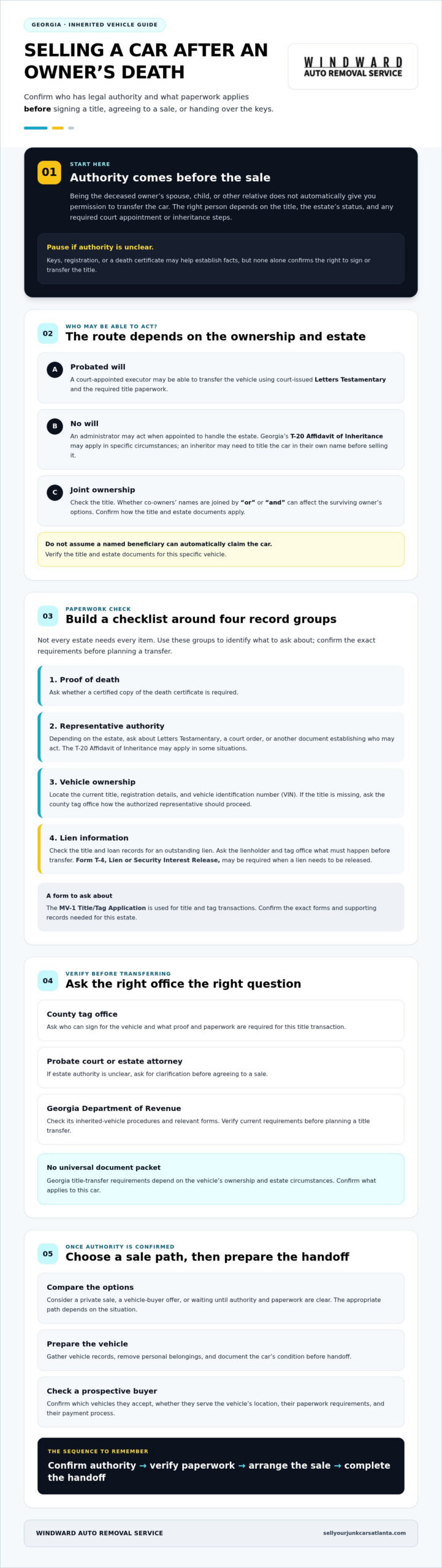
Before you negotiate a price, sign a title, or hand over the keys, confirm who has legal authority to sell the vehicle. Being the deceased owner’s spouse, child, or other relative doesn’t automatically give you permission to transfer ownership. The right person depends on the title, the estate’s status, and any court appointment or inheritance steps required.
In a probated estate, the court-appointed executor manages estate property under their authority. An administrator may act when appointed to handle an estate without a will. These roles are part of the probate process, but you’ll need to verify the documents and steps required for a particular car sale in Georgia.
First action: Ask the relevant Georgia county tag office who can sign for the vehicle and what proof is required. If the estate’s authority is unclear, check with the probate court handling the estate or its attorney before agreeing to a sale.
Who may be able to act for the deceased owner?
An executor named in a probated will may be able to transfer the vehicle directly to a buyer using court-issued Letters Testamentary and the required title paperwork. If there was no will, the inheritance route can differ. Georgia’s T-20 Affidavit of Inheritance may apply in specific circumstances, and the inheritor may need to title the car in their own name before selling it.
Check the title itself. If two owners are listed, whether their names are joined by “or” or “and” can affect the surviving owner’s options. Don’t assume a named beneficiary can claim the car automatically. Confirm how the title and estate documents apply to the situation.
When should the family pause before selling?
Pause if the person proposing the sale isn’t clearly authorized, the title lists another owner, or the estate documents don’t match the vehicle’s ownership records. Keys, registration, or a death certificate may help establish facts, but none alone confirms the right to sign or transfer the title.
Before proceeding, ask the estate’s attorney or the relevant Georgia probate court to clarify the representative’s authority. Then verify the vehicle-specific paperwork with the county tag office. This is a practical first step if you plan to sell car after owner’s death Georgia. It can help prevent a buyer from being asked to complete a transfer the seller isn’t authorized to make.
Check Georgia Probate and Title Requirements Before Transferring the Car
Gather records before anyone signs the title or commits to a sale. Georgia title-transfer requirements depend on the vehicle’s ownership and estate circumstances. There isn’t one document packet for every estate, so use this checklist to identify what to ask about. Confirm current instructions with the Georgia Department of Revenue and the probate court handling the estate.
The Georgia Department of Revenue outlines inherited-vehicle procedures and relevant forms. The county tag office handles vehicle title transactions. Ask that office what it needs for this vehicle and situation, and contact the county probate court about court-issued estate documents or orders. Verify current requirements before planning a title transfer.
Which records should the representative gather?
Sort the paperwork into four groups. Not every estate will need every item, but having the records ready makes it easier to see what’s missing:
- Proof of death: Ask whether a certified copy of the death certificate is required.
- Representative authority: Depending on the estate, ask about Letters Testamentary, a court order, or another document establishing who may act. Georgia’s T-20 Affidavit of Inheritance may apply in some situations. The inheritor may need to title the vehicle in their own name before selling it.
- Vehicle ownership: Locate the current title, registration details, and vehicle identification number (VIN). If the title is missing, ask the tag office how the authorized representative should proceed.
- Lien information: Check the title and loan records for an outstanding lien. Ask the lienholder and tag office what must happen before transfer. Form T-4, Lien or Security Interest Release, may be required when a lien needs to be released.
These are questions to verify, not a universal list of required documents. The MV-1 Title/Tag Application is used for title and tag transactions, but confirm the exact forms and supporting records needed for this estate before completing an application.
How do title ownership and liens affect the sale?
Read the title’s owner names and wording before anyone signs. A sole owner, joint owners connected by “or,” and joint owners connected by “and” can involve different transfer steps. Match the proposed seller’s authority to the title and estate records. Don’t assume a family relationship or possession of the vehicle resolves a mismatch.
A lien can also prevent a straightforward transfer until the required release or approval is in place. Don’t promise a buyer a clear title until its status is confirmed. Once authority and paperwork are verified, a representative in Metro Atlanta, including Alpharetta, may consider a cash-for-cars option. First check whether the buyer accepts the vehicle, serves its location, and can work with the required transfer documents.
Compare the Main Paths for Selling an Inherited Car in Georgia
Once the representative has confirmed authority, compare sale routes against the vehicle’s condition and the work involved. A car that runs well may suit a private sale, while an unwanted, damaged, or non-running vehicle may make a direct vehicle-buyer offer worth considering. Condition affects what’s practical. It does not determine who has legal authority to sell.
For heirs checking sell car after owner’s death Georgia, Hall County’s guidance on Georgia inheritance procedures illustrates why the estate’s circumstances matter. Confirm the process for your county and vehicle before agreeing to a transfer. Any offer and payment terms remain subject to verified authority, title requirements, and the buyer’s paperwork requirements.
| Route | Eligibility and paperwork questions | Effort and timing considerations | Suitable circumstances |
|---|---|---|---|
| Private sale | Is the representative authorized to sell? What title and transfer documents must be signed? | Usually requires advertising, responding to questions, arranging viewings or test drives, and coordinating paperwork. Timing depends on finding a buyer and completing the transfer. | The car is presentable and the representative can manage buyer coordination. |
| Dealer or vehicle-buyer offer | Will the buyer consider the vehicle’s condition? Which estate and title documents will they require before proceeding? | Ask about the buyer’s evaluation, payment, and handoff process. Confirm requirements before arranging pickup or delivery. | The representative prefers to compare a direct offer, especially for an unwanted, damaged, or non-running car. |
| Delay the sale | What authority, title, or lien question remains unresolved? | There’s no sale to coordinate yet. Use the pause to get clarification from the estate attorney, probate court, or county tag office. | The seller’s authority or required paperwork is uncertain or conflicting. |
Is a private sale the right route?
A private sale puts more coordination on the representative: creating an advertisement, answering buyer questions, arranging test drives, and managing the title transfer. Before accepting payment, confirm who must sign and what documents the county requires. Don’t commit to a handoff until the authorized seller and transfer steps are clear.
When might a vehicle buyer be more practical?
A direct vehicle buyer may be an option for a car that’s unwanted, damaged, or no longer running. Describe its condition accurately and ask which documents are needed before arranging a handoff. Windward Auto Removal Service buys used, unwanted, junk, and totaled vehicles in Metro Atlanta, including Alpharetta. Confirm coverage for the vehicle’s location and the buyer’s requirements before proceeding.
Follow These Steps to Prepare the Car and Complete a Georgia Sale
If you’re preparing to sell car after owner’s death Georgia, keep the process in order: confirm authority, verify the title steps, prepare the vehicle, and complete the handoff only when the required paperwork is clear.
- 1. Confirm authority. Identify who may act for the vehicle and confirm the supporting estate documents.
- 2. Verify title requirements. Ask the county tag office what applies to this vehicle and estate, including any steps for a lost title or lien.
- 3. Gather records. Collect the title, registration details, VIN, known lien information, and the documents the tag office confirms are needed.
- 4. Choose a sale route. Compare a private sale with a dealer or vehicle-buyer offer. Share accurate details about the car’s location and condition.
- 5. Complete the transfer. Confirm the authorized signer, payment method, title paperwork, and pickup arrangements before releasing the vehicle.
Before accepting an offer
- Prepare the vehicle’s year, make, model, VIN, location, condition, title status, and known lien details.
- Ask the buyer what paperwork they require, then verify those requirements with the county tag office or another appropriate official source.
- Don’t send sensitive estate documents until you’ve verified the recipient and why the documents are needed.
Before the handoff
- Confirm the authorized signer, agreed payment method, transfer documents, and pickup plan.
- Remove personal belongings. Photograph the vehicle and note its condition before pickup or delivery.
- Ask the county tag office whether plates or toll devices should be removed and whether any notice or follow-up filing applies. Follow its current instructions.
- Keep copies of signed transfer documents and transaction records. Confirm with the tag office which records to retain.
What should be ready before requesting an offer?
Having the vehicle details and title status ready helps you ask clear questions without assuming a buyer can proceed. Disclose known damage or that the car doesn’t run. If a lien appears on the title, mention it and confirm what release or approval is required before moving ahead. Keep original estate documents secure unless an official office or verified buyer explains why they need to see them.
What should happen at payment and vehicle handoff?
Don’t hand over the car based only on a verbal agreement. Check that the authorized representative signs the correct paperwork, confirm how payment will be made, and document when the vehicle changes hands. For a possible sale in Alpharetta or elsewhere in Metro Atlanta, request a cash offer for the vehicle after confirming authority and paperwork requirements.
After Confirming Authority, Choose a Georgia Vehicle Buyer and Take the Next Step
Confirm the representative’s authority and the required title documents before contacting buyers or scheduling pickup. A buyer’s interest doesn’t resolve an estate or title issue, and the vehicle shouldn’t be handed over until the authorized signer and transfer steps are clear.
Once you’re ready to compare options, focus on practical details. Ask each buyer:
- Does the buyer consider vehicles in this condition, including unwanted, damaged, or non-running vehicles?
- What title and estate documents will the buyer need to review?
- Does the buyer serve the vehicle’s location, and what pickup arrangements are available?
- How is payment handled, and what conditions must be met before the transaction is final?
Get clear answers before making a commitment. Don’t assume a buyer accepts a particular title situation, document, payment method, or pickup arrangement. Verify each point for the specific vehicle and location.
How can readers evaluate a vehicle buyer?
Share an accurate description of the car and explain that it’s part of an estate. Ask what paperwork the buyer requires, then compare that request with the instructions you’ve confirmed through official Georgia channels. Windward Auto Removal Service buys used, unwanted, junk, and totaled vehicles in Metro Atlanta, including Alpharetta. Confirm that the vehicle’s location is within its current service area and ask about pickup logistics before proceeding.
Choose a buyer who explains the paperwork and payment process clearly. A clear answer helps you know what to prepare, but it doesn’t replace confirmation from the county tag office or the estate’s legal representative.
What if the Georgia paperwork is still unclear?
Pause the sale. Contact the Georgia Department of Revenue or the county tag office for current vehicle-title instructions. For questions about court authority, an estate order, or who may act, contact the probate court handling the matter. If heirs disagree, the estate is contested, or authority remains uncertain, consult an attorney. Don’t schedule pickup or sign transfer documents until those questions are resolved.
Once authority and paperwork are confirmed, Metro Atlanta readers can contact Windward Auto Removal Service to discuss selling an eligible vehicle. If the title or estate situation still needs clarification, settle that first. Then compare buyer requirements and decide how to proceed.
Confirm the Paperwork, Then Move Ahead With the Sale
The key to selling a car after the owner’s death in Georgia is to establish who can act before negotiating, signing, or arranging a handoff. Then confirm the title and estate documents required for that vehicle with the appropriate Georgia office. If ownership, liens, or representative authority remain unclear, pause and get answers before proceeding.
Once the paperwork is confirmed, choose a sale route that fits the vehicle’s condition and the representative’s needs. Compare buyer requirements, payment methods, and pickup arrangements. Keep transaction records and follow current title-transfer instructions.
Windward Auto Removal Service buys unwanted, used, junk, and totaled vehicles in Metro Atlanta, including Alpharetta. Confirm coverage for the vehicle’s location and discuss the buyer’s requirements before making plans. To explore selling an eligible vehicle, contact Windward Auto Removal Service about your vehicle. Confirm authority and paperwork first so you can move forward with the next steps clear.
Frequently Asked Questions
Can I sell my deceased parent’s car in Georgia?
You may be able to sell it, but being the owner’s child doesn’t by itself establish authority to sign the title. If a will was probated, the court-appointed executor may be able to transfer the vehicle using Letters Testamentary and the required title documents. In some no-will situations, an inheritor may use Georgia’s T-20 Affidavit of Inheritance, but may need to title the car in their own name first. Confirm the right process before agreeing to a sale.
Do I need probate to sell a car after the owner dies in Georgia?
Not every inherited vehicle sale follows the same probate path. If a will was probated, the executor can use Letters Testamentary to transfer the title. In certain situations where there’s no will and the estate isn’t indebted, an inheritor may use the notarized T-20 Affidavit of Inheritance and title the vehicle in their own name before selling it. A “No Administration Necessary” court order may apply in specific cases. Verify the requirements with the probate court and county tag office.
Who can sign the title when a car owner dies in Georgia?
The person authorized to sign depends on the title and estate documents. An executor appointed through probate may sign using Letters Testamentary. An administrator or an inheritor may have a role under a different process, but must confirm the applicable authority and paperwork. Joint ownership matters too: a title listing owners with “or” may allow the surviving owner to sell, while “and” can require inheritance steps for the deceased owner’s share. Check before signing.
What documents may be needed to transfer a deceased person’s car title in Georgia?
Requirements vary, but documents to ask about include the original title, a certified death certificate, proof of representative authority, and a completed MV-1 Title/Tag Application. Depending on the circumstances, the executor may need Letters Testamentary, or an inheritor may need the notarized T-20 Affidavit of Inheritance. If there’s an outstanding lien, ask whether a T-4 Lien or Security Interest Release is required. Confirm the current list with the county tag office.
Can an executor sell a car before probate is complete in Georgia?
An executor shouldn’t assume they can complete a vehicle sale before their authority is established. For a will that has been probated, the executor may transfer the title directly to a buyer with Letters Testamentary and the required paperwork. If probate is ongoing or the executor’s appointment and authority aren’t clear, pause before signing or transferring the title. Ask the probate court handling the estate or its attorney what the executor can do at that stage.
What happens if the deceased owner’s car still has a loan or lien?
An outstanding lien can affect whether the title can be transferred, so identify the lienholder and ask what must be resolved before the sale. Georgia’s T-4 Lien or Security Interest Release may be required when a lien needs to be released. Don’t assume the estate representative or buyer can transfer the car without the necessary approval and release. Verify the lien status and required steps with the lienholder and county tag office before arranging the handoff.
Can I sell an inherited car in Georgia if I cannot find the title?
A missing title doesn’t mean you can proceed without resolving the paperwork. Georgia’s guidance says a replacement title can’t be issued in the deceased person’s name; the individual with legal authority over the estate must handle obtaining a new title. Contact the county tag office to confirm the current process and documents for the vehicle. Once authority and title requirements are clear, an eligible vehicle buyer in Alpharetta or elsewhere in Metro Atlanta may be a sale option.