
Environmental Impact of Scrapping a Car: What Happens to Your Vehicle?
What if scrapping a car could reduce waste, but careless handling created a pollution problem? The environmental impact of scrapping a car depends on what happens after it leaves your driveway. You may be concerned about leaking oil, antifreeze, or other hazardous materials, or wonder whether an unwanted vehicle will be recycled or simply abandoned.
The word “scrap” doesn’t determine a vehicle’s end-of-life impact. Responsible recovery can help prevent harmful fluids and components from polluting soil and water, while returning usable materials to circulation. This guide explains the main environmental risks and potential benefits, what recovery can involve, and how to choose a more informed next step without assuming every part will be recycled.
You’ll also find practical steps to take before a vehicle leaves your property. In Metro Atlanta, including Alpharetta, Windward Auto Removal Service buys unwanted, used, junk, totaled, and fleet vehicles for recycling or wholesale liquidation. Selling an unused vehicle can be an alternative to leaving it idle or abandoning it. Knowing what a sale does and doesn’t tell you about the vehicle’s next route can help you make a careful decision.
Key Takeaways
- The environmental impact of scrapping a car depends on how it’s handled, not just whether it’s called scrap.
- Compare continued use, resale, parts reuse, and vehicle recycling before deciding what to do with an unwanted car.
- Motor oil, coolant, brake fluid, refrigerants, and lead-acid batteries need careful handling.
- Vehicle materials may be separated for recovery, but that doesn’t mean every component will be recycled.
- Selling an unwanted vehicle in Metro Atlanta can provide an alternative to leaving it unused or abandoning it.
Environmental Impact of Scrapping a Car: The Main Trade-Offs
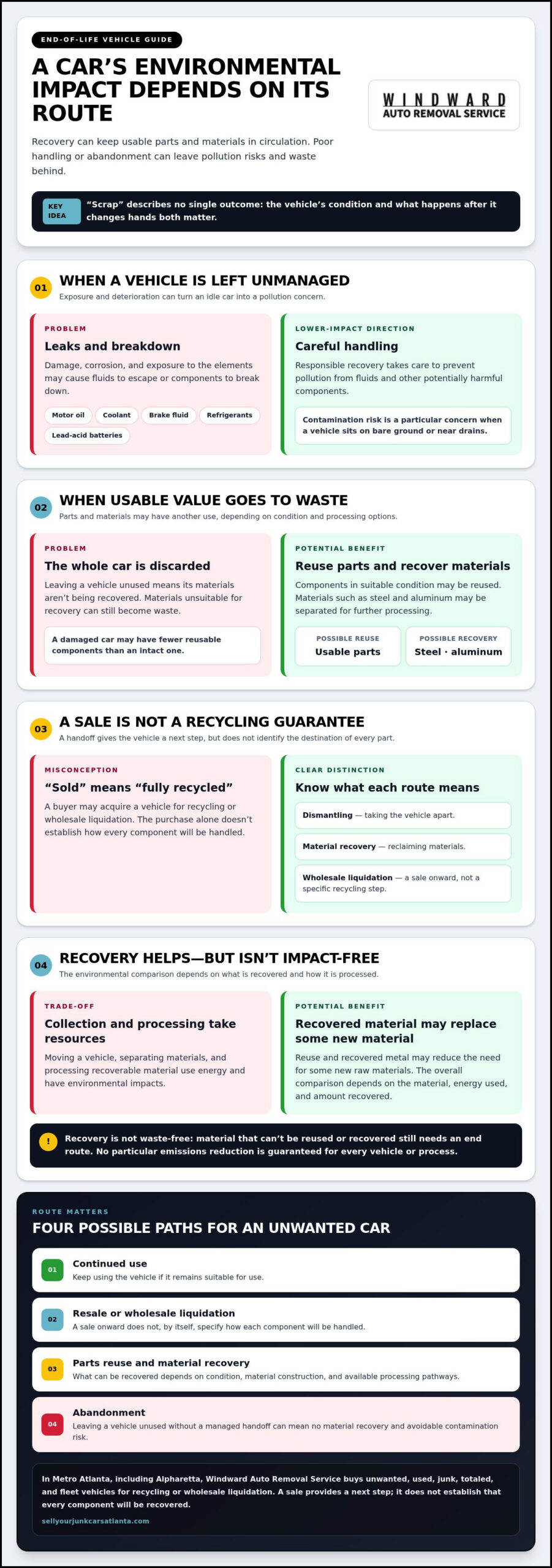
Scrapping a car means taking it out of regular use, often because it’s damaged, worn out, or no longer wanted. The term doesn’t describe one fixed process. A vehicle might be dismantled for reusable parts, sent through material recovery, sold onward through wholesale liquidation, or left abandoned. Each route has different consequences.
Responsible end-of-life vehicle recycling means recovering usable parts and materials while taking care to prevent pollution from fluids and other potentially harmful components. Selling a car for recycling or wholesale liquidation is not the same as knowing how every component will be handled afterward.
What does scrapping a car mean?
A car may hold value even when it is no longer roadworthy. Usable components may be removed for reuse, while materials such as metal may be separated for recovery. Dismantling means taking a vehicle apart. Material recovery focuses on reclaiming materials. Wholesale liquidation is a sale onward, not a specific recycling step. Abandonment means leaving the vehicle unused without a managed handoff.
The vehicle’s condition and what happens after it changes hands affect its route. A damaged car may have fewer reusable components than an intact one. A buyer may acquire a vehicle for recycling or wholesale liquidation, but the purchase alone doesn’t establish the final destination of each part or material.
Why does the disposal route matter?
An unmanaged vehicle can deteriorate over time. Damage, corrosion, and exposure to the elements may cause fluids to escape or components to break down. This can create a contamination risk, particularly if the vehicle sits on bare ground or near drains. Leaving a car unused also means its materials aren’t being recovered.
Careful recovery offers another possibility: usable parts may serve another vehicle, and recovered materials can remain in circulation instead of being discarded with the whole car. This may reduce demand for some new raw materials, though the benefit depends on what is recovered and how it is processed. The environmental impact of vehicle recycling varies with the methods used to dismantle vehicles and recover materials.
That’s the central trade-off in the environmental impact of scrapping a car: recovery can preserve material value, while poor handling or abandonment can create avoidable pollution and waste. The car’s condition matters, as does its route after sale. No single outcome applies to every vehicle.
For an owner in Alpharetta, a practical first step is to distinguish a managed sale from simply leaving a vehicle behind. Windward Auto Removal Service buys unwanted, used, junk, and totaled vehicles, as well as trucks, SUVs, vans, and fleet vehicles in Metro Atlanta, for recycling or wholesale liquidation. Selling gives the vehicle a next step, but doesn’t establish that every component will be recovered.
How Car Recycling Affects Materials, Energy, and Waste
Vehicles contain a mix of materials and components, and these don’t all follow the same path at the end of a car’s useful life. Depending on their condition and the recovery process, some parts may be reused, while materials such as steel and aluminum may be separated for further processing. Other material may not be suitable for recovery and can become waste.
Recovering usable parts and materials can reduce what gets discarded and the need for some new raw materials, but collection and processing still use energy and have environmental impacts. Recovery can make better use of what is already in a car, but it doesn’t eliminate the vehicle’s end-of-life footprint.
Which vehicle materials may be recovered?
Steel and aluminum are common examples of materials that may be separated from a vehicle. Components in usable condition may also be removed for reuse. What can be recovered depends on the vehicle’s damage and corrosion, how its materials are joined, and the capabilities and local pathways available for processing them.
A car with severe collision damage may have fewer reusable components than an intact vehicle, even if some of its materials remain recoverable. There’s no single route for every car, and a material’s presence in a vehicle doesn’t guarantee it will be reclaimed.
How does recycling compare with making new materials?
New materials generally involve extracting raw resources, processing them, and manufacturing them into products. Recovery also has stages, including moving the vehicle, separating materials, and processing what can be reclaimed.
When recovered metal replaces some newly sourced material, it may reduce demand for extraction and initial processing. The overall comparison depends on the material, the energy used at each stage, and how much is recovered. Without a verified comparison for a specific process, don’t assume a particular emissions reduction.
- Reuse: A component in suitable condition may be used again, potentially avoiding the need to manufacture a replacement.
- Material recovery: Separated metal may become feedstock for further manufacturing, depending on the processing route.
- Residual waste: Materials that can’t be reused or recovered still need an end route, so recovery isn’t waste-free.
These distinctions explain why the environmental impact of scrapping a car can’t be judged by the word “scrap” alone. The outcome depends on the vehicle’s condition, its materials, and what happens during recovery. For an unwanted car in Metro Atlanta, selling to Windward Auto Removal Service is an alternative to leaving it unused. The business buys vehicles for recycling or wholesale liquidation, but not every component is necessarily recovered. If you’re considering a sale, you can sell an unwanted car in Atlanta.
Pollution Risks: Fluids, Batteries, and Improper Car Disposal
A damaged or abandoned vehicle can become an environmental concern if parts deteriorate or fluids escape. That doesn’t mean every parked car is leaking, or that a stain proves contamination has reached soil or water. The vehicle’s condition and where it sits matter. A cracked hose, damaged reservoir, or corroded section can create a pathway for a leak, especially when a car remains exposed to the weather.
The environmental impact of scrapping a car includes more than the materials that can be recovered. It also depends on whether fluids and components are handled in a way that avoids preventable releases. Responsible recovery starts with recognizing potential hazards, not assuming every vehicle presents the same risk.
What environmental risks can leaking fluids create?
Motor oil, coolant, and brake fluid can escape from damaged systems and soak into nearby soil. Rain may carry some contaminants toward storm drains or waterways. The actual impact depends on the amount released, the location, and other site conditions. A visible leak signals a concern, but it doesn’t establish the extent of contamination.
Refrigerants in air-conditioning systems also need appropriate handling. Don’t try to drain or remove vehicle fluids yourself. Damaged parts, unknown contents, and improper handling can create safety risks as well as environmental ones. Keep people away from an apparent leak and seek guidance from an appropriate professional or agency.
Why do batteries and other components need careful handling?
Lead-acid batteries contain lead and an electrolyte that can pose hazards if the battery is damaged or mishandled. They’re one concern among several. A vehicle may also contain refrigerants, fluids, and other components that need suitable recovery or disposal pathways. Requirements can vary by material, so don’t assume one general rule covers every part.
For current handling information, consult the U.S. EPA’s used oil guidance and Georgia Environmental Protection Division solid waste resources. These agencies are a starting point for specific guidance. Requirements can depend on the material and situation, so use current official guidance when a disposal or handling rule matters.
Abandonment and managed vehicle recovery are not equivalent. An abandoned car can sit without anyone addressing a developing leak or deteriorating component. A vehicle sold for recycling or wholesale liquidation has a buyer and a next step, though that alone doesn’t guarantee how every fluid or part will be handled downstream. When arranging a sale, describe visible issues such as a leak, damaged battery, or exposed component. Don’t touch or attempt to remove hazardous materials yourself.
For owners in Alpharetta, selling an unwanted or totaled vehicle to Windward Auto Removal Service is an alternative to leaving it unused or abandoning it. The business purchases vehicles for recycling or wholesale liquidation. Make an informed handoff, and use current agency guidance for specific handling questions.
How to Choose a Lower-Impact End-of-Life Option for Your Car
There isn’t one best answer for every unwanted vehicle. A car that still runs safely and meets your needs may have useful life left. A totaled or badly deteriorated vehicle may be better suited to resale, parts reuse, or recycling. Start by assessing its condition, then consider whether it can remain in use and choose a clear route rather than leaving it unattended.
Should you repair, sell, reuse, or recycle the vehicle?
Begin with the vehicle’s condition and your plans for it. If it remains useful, keeping it in service may make sense. If you no longer need it, resale can put a usable car in another owner’s hands. A vehicle with useful components may have a parts-reuse route. One that’s no longer practical to drive may be considered for recycling or wholesale liquidation.
Don’t assume scrapping is automatically the lower-impact choice. Repair keeps a vehicle in use, while resale transfers it to another owner. Reuse and recycling depend on the vehicle’s condition and the recovery route. The environmental impact of scrapping a car comes down to these details, not just the label attached to the transaction.
What can owners do before handing over an unwanted car?
Prepare for a straightforward handoff. Gather the ownership paperwork you have, remove personal belongings, and note visible damage or fluid leaks. Don’t leave the vehicle abandoned or unattended where a developing leak could go unnoticed. If you’re uncertain about title or disposal steps, use current guidance from the Georgia Department of Revenue or your county tag office rather than relying on assumptions.
- Assess the vehicle: Note whether it runs, its visible condition, and whether it still has practical use.
- Consider continued use or resale: A working car may be repairable or suitable for another owner, depending on its condition and your needs.
- Choose an exit route: If it’s no longer useful to you, consider parts reuse, recycling, or wholesale liquidation through a vehicle buyer.
- Prepare the transfer: Collect ownership documents and personal belongings, then review current Georgia guidance for requirements that apply to your situation.
Clear ownership paperwork helps establish who is transferring the vehicle and can make a legitimate transaction easier to complete. Georgia requirements depend on the vehicle and circumstances, so general online advice isn’t a substitute for current state guidance. For an overview of the local process, the Atlanta junk car removal guide covers key considerations for selling an unwanted vehicle.
In Metro Atlanta, Windward Auto Removal Service buys unwanted, used, junk, and totaled vehicles, along with trucks, SUVs, vans, and fleet vehicles, for recycling or wholesale liquidation. If your car is ready to leave your property, sell your unwanted car in Atlanta rather than leaving it unused or abandoned.
A Practical Local Next Step for an Unwanted Car in Metro Atlanta
An unwanted vehicle doesn’t have to remain parked indefinitely. If it’s no longer useful, practical to keep, or wanted by another driver, selling it to a vehicle buyer can clear space and move it toward a next step. Keep the distinction in mind: a sale transfers the vehicle to a buyer, but doesn’t guarantee that every part or material will be recycled in a particular way.
Windward Auto Removal Service is a locally owned Metro Atlanta vehicle buyer serving Alpharetta. The business purchases vehicles for recycling or wholesale liquidation. This gives owners ready to sell a practical option while keeping the vehicle’s eventual route in perspective.
When selling an unwanted vehicle makes practical sense
Selling may make sense if a car is totaled, no longer useful to you, or taking up space without a clear plan. The same decision can apply to a truck, SUV, van, or fleet vehicle. If the vehicle still serves a purpose or could suit another owner, consider those options first. If not, a direct sale can help you move on instead of leaving it sitting unused.
Before arranging a transfer, gather the information you have about the vehicle and its condition. Be clear about whether it runs, and mention visible damage or other issues. Accurate details help set realistic expectations for the transaction. For current title or transfer requirements, use official Georgia guidance that applies to your circumstances.
Take the next step with Windward Auto Removal Service
The environmental impact of scrapping a car depends on what happens to the vehicle after it leaves its owner. Selling it moves an unwanted car into a buyer’s process, but doesn’t prove that specific parts will be reused or materials recovered. Windward buys unwanted, used, junk, and totaled cars, as well as trucks, SUVs, vans, and fleet vehicles across Metro Atlanta, including Alpharetta.
The cash for junk cars in Atlanta page explains the vehicle-buying option in more detail. Review the information, consider whether a sale fits your situation, and choose a clear route instead of letting an unwanted vehicle sit without a plan.
Ready to move forward? Explore selling your unwanted vehicle in Metro Atlanta with Windward Auto Removal Service.
Make Your Next Move With Confidence
You can’t determine a vehicle’s full environmental impact from the sale alone. You can choose a clear next step, share accurate details about the car, and avoid leaving it unused without a plan. That makes for a more informed handoff without assuming what will happen to every part afterward.
If the vehicle no longer fits your needs, compare your options and decide whether selling is practical. Windward Auto Removal Service is locally owned and operated and buys unwanted vehicles in Metro Atlanta, including Alpharetta. The vehicles purchased include cars, totaled vehicles, trucks, SUVs, vans, and fleet vehicles for recycling or wholesale liquidation.
Take the next step at your pace. Explore your options for an unwanted vehicle with Windward Auto Removal Service. A clear decision can help you reclaim your space and move on with confidence.
Frequently Asked Questions
Is scrapping a car bad for the environment?
Not necessarily. The environmental impact of scrapping a car depends on its condition and what happens after it leaves the owner. A poorly managed or abandoned vehicle can pose pollution risks, while a managed sale may lead to parts or materials being recovered. Scrapping doesn’t guarantee every component will be recycled, so consider the vehicle’s route and avoid leaving it without a clear plan.
Can scrapping a car help reduce the need for new raw materials?
It can if recovered materials are used in place of newly sourced materials. For example, recovered metal may re-enter manufacturing instead of being discarded. The benefit depends on what is actually recovered and how it is processed. A vehicle sale alone can’t confirm that a specific material will be reclaimed, but recovery can keep useful resources in circulation.
What happens to a car after it is scrapped?
There isn’t one path for every vehicle. Depending on its condition and the buyer’s next steps, a car may be dismantled for usable components, directed toward material recovery, or sold onward through wholesale liquidation. Some parts may be unsuitable for reuse or recovery. Keep a record of the sale and the vehicle’s identifying details so you can document the transfer if questions arise later.
What parts of a scrapped car can be recycled or reused?
Parts in usable condition, such as an alternator, starter, or door, may be candidates for reuse, depending on their state and demand. Metal components, including steel and aluminum, may also be recovered through appropriate processing. Tires, glass, plastics, and other materials can have different recovery routes. Their presence in a vehicle doesn’t guarantee reuse or recycling. Condition and processing options matter.
Can fluids from an old car contaminate soil or water?
Yes. Leaking motor oil, coolant, or brake fluid can pose a contamination risk if they reach soil, a drain, or nearby water. A stain under a vehicle is a reason for caution, but doesn’t prove the extent of contamination at a particular location. Don’t touch or drain unknown fluids yourself. For handling guidance, consult the U.S. EPA or Georgia Environmental Protection Division.
Is recycling an old car better for the environment than leaving it unused?
Often, a managed recovery route is more constructive than leaving a vehicle to deteriorate, but the best choice depends on whether the car can still be used. A roadworthy vehicle may remain useful to you or another owner. If it’s no longer practical to keep, arranging a sale or recovery route gives it a defined next step instead of leaving it unattended.
What should I do with an unwanted car in Georgia?
First, decide whether the car is still useful or suitable for resale. If you’re ready to let it go, gather the ownership documents you have, remove personal belongings, and note the vehicle’s condition. Check current Georgia Department of Revenue guidance for title and transfer steps that apply to your situation. In Alpharetta, Windward Auto Removal Service buys unwanted, used, junk, and totaled vehicles, plus trucks, SUVs, vans, and fleet vehicles.