
Sell a Salvage Title Car in Alpharetta for a Cash Offer
A salvage title doesn’t mean your car is unsellable. To sell a car with a salvage title in Alpharetta, choose a buyer that purchases damaged or totaled vehicles. In Georgia, a vehicle may be considered salvage if restoring it to operable condition requires replacing two or more component parts. Salvage vehicles can’t legally be driven on Georgia public roads.
A salvage title can make selling feel complicated, especially if you’re unsure which paperwork to gather or how pickup works. A clear offer process and practical steps can help you move ahead without guesswork.
This guide explains where to sell, what can affect a cash offer, how vehicle pickup generally fits into the sale, and which Georgia documents to prepare. You’ll also learn how to handle the title and payment carefully so you can move forward with a practical plan.
Key Takeaways
- Choose a buyer that handles damaged, wrecked, or salvage vehicles, and share the car’s condition and title status when requesting an offer.
- Set out payment and pickup arrangements before the handover, and don’t sign the title over before receiving payment.
- Gather the vehicle title and sale paperwork; a completed Georgia Bill of Sale can help document the transaction.
- Remove the license plates before pickup and return them to the DMV.
- Learn which vehicle details can shape a cash offer and how to prepare for pickup without overlooking key sale steps.
Where Do You Buy Junk Cars in Alpharetta?
In Alpharetta, Georgia, you can sell a salvage-title car to a cash vehicle buyer or a private buyer. Before agreeing, compare how each handles the title, damage details, payment, and pickup.
Selling Damaged and Wrecked Vehicles
Cash buyers may purchase damaged, junk, and wrecked vehicles, including cars that no longer run. A private buyer may also consider a repairable vehicle. Describe the damage clearly: note, for example, whether a collision affected the doors, engine, or wheels. Share the title brand and whether the car starts, moves, or has missing parts. These details help the buyer assess the vehicle accurately.
For body damage, document the affected panels and any visible mechanical problems. A dented fender differs from collision damage that stops the car from moving. Take clear photos of each damaged area and describe the vehicle honestly. If it’s totaled, a buyer that purchases totaled vehicles may be a practical option. Compare offers based on the same damage details.
Salvage and Damaged Vehicle Removal
Before arranging removal, tell the buyer whether the vehicle runs and where it’s parked. A driveway presents different access needs from a locked gate or a car blocked inside a garage. Confirm the pickup location, access instructions, and loading plan. If the car can’t roll or steer, mention that before scheduling pickup.
Keep the title and keys ready, and remove personal belongings before pickup. If the vehicle is on private property, make sure the buyer can reach it without moving other cars. A clear description of its condition and location helps avoid confusion at handover. Agree on payment and pickup details before releasing the vehicle.
Vehicle Titles and Damage Categories
Georgia considers a vehicle salvage if restoring it to operable condition requires replacing two or more component parts. A vehicle imported with shipment damage and disclaimed by its manufacturer is also considered salvage if it has never had a retail sale or title. These categories differ from ordinary body damage, so describe both the title brand and physical condition.
A vehicle titled in another state and branded “Total Loss,” “Salvage,” “Fire,” “Flood,” or “Water” is considered salvage in Georgia. Salvage vehicles can’t legally be driven on Georgia public roads. When discussing a sale, share the exact title brand instead of calling the car only wrecked. This helps the buyer understand both its paperwork and condition.
Advice for selling to junkyards or private buyers
Compare buyers by how they handle salvage paperwork, damaged vehicles, payment, and pickup. In Alpharetta, share the same vehicle details with each buyer to compare offers fairly.
Selling to a Salvage Yard
A salvage yard may assess a car for reusable components or scrap, depending on its condition. Describe whether the engine starts, whether the vehicle rolls, and which parts are missing or damaged. Share the title brand and clear photos. Before agreeing, confirm the proposed payment method, pickup plan, and paperwork process in writing. Keep a copy of the sale documents.
Selling a Wrecked Car in Alpharetta
For a wrecked car, list visible damage and known issues that affect movement. For example, note a crushed front end, a deployed airbag, or a wheel that won’t turn. Buyers can assess the vehicle more accurately when your description matches its condition. Remove personal belongings and make sure the pickup location is accessible.
Private buyers may focus on whether repairs could make the car usable. A salvage buyer may instead consider its parts and scrap materials. Compare offers using the same details, including title status, damage, and whether the vehicle runs. Don’t compare an offer for a running car with one based on an incomplete damage description.
Selling without a title can be harder because buyers need confidence that ownership can be transferred. Look for the title before advertising, and check your records for the vehicle identification number and registration paperwork. Don’t treat registration as a substitute for title paperwork. Explain the missing-title situation honestly before arranging payment or pickup.
For cars in Alpharetta, prepare a short, consistent vehicle summary before contacting buyers. Include the make, model, year, mileage if known, title brand, and major damage. Add photos of the exterior, interior, and problem areas. This gives buyers a clearer basis for an offer and reduces confusion when they see the car.
Protect the handover. Don’t sign the title over before receiving payment. Keep a record of the buyer’s details, agreed amount, and transaction. A completed Georgia Bill of Sale may help provide proof of purchase and serve as a personal record. Remove your license plates before pickup and return them to the DMV.
If you’re comparing options for a damaged vehicle, consider whether junk car buyers fit your situation. Match the buyer to the car’s condition and title status, then settle the payment and pickup details before handing over the keys.
Payment deadlines and pickup arrangements
Agree on the payment method, timing, and pickup plan before handing over a salvage vehicle. A written agreement helps keep the offer, payment, and removal details aligned.
Pickup and Payment Process
Start by giving the buyer the vehicle’s location, title status, and condition. Explain whether it starts, rolls, or has damage that prevents loading. For example, a car with a locked wheel may need different loading arrangements from one that runs. Agree on a pickup window and who will be present at handover.
Before the vehicle leaves, compare the agreed offer with the payment you receive. Don’t sign the title over before payment. Keep a written record of the amount, payment method, pickup date, and buyer’s details. If payment is by check, confirm the amount and recipient information before completing the transfer. Don’t hand over the keys or title paperwork while payment remains unresolved.
Free Towing and Pickup
Some offers may include towing, while others may handle removal costs differently. Treat “free towing” as a specific term to clarify in the written offer, not an assumption based on the word “cash.” Confirm whether the quoted amount accounts for pickup, loading, and the vehicle’s condition. That prevents a towing charge from changing the amount you expected to receive.
Give the pickup team useful access details. Identify a narrow driveway, locked gate, low-clearance garage, or vehicle parked behind another car. State whether the car can roll and steer. These details matter because a damaged vehicle that can’t move may need different loading equipment. Clear information helps the buyer plan the removal.
Keep the vehicle and paperwork ready for the agreed handover. Remove personal items from the cabin and trunk, and gather the title and keys. If another person must release the car, arrange for them to be present. For a vehicle at a repair shop or storage property, confirm that the pickup team can access it and that the property allows removal.
Make payment timing explicit. Record when and how payment will be made, and what happens if pickup is delayed. Don’t rely on a verbal promise that payment will follow later. A completed Georgia Bill of Sale may help document the transaction and provide a personal record. Keep your copy with the payment record after the vehicle is collected.
Before confirming pickup, review the written terms against the vehicle’s actual condition and location. If it has a flat tire, missing key, or blocked access, disclose that in advance. Accurate details reduce last-minute changes and make handover clearer for both sides.
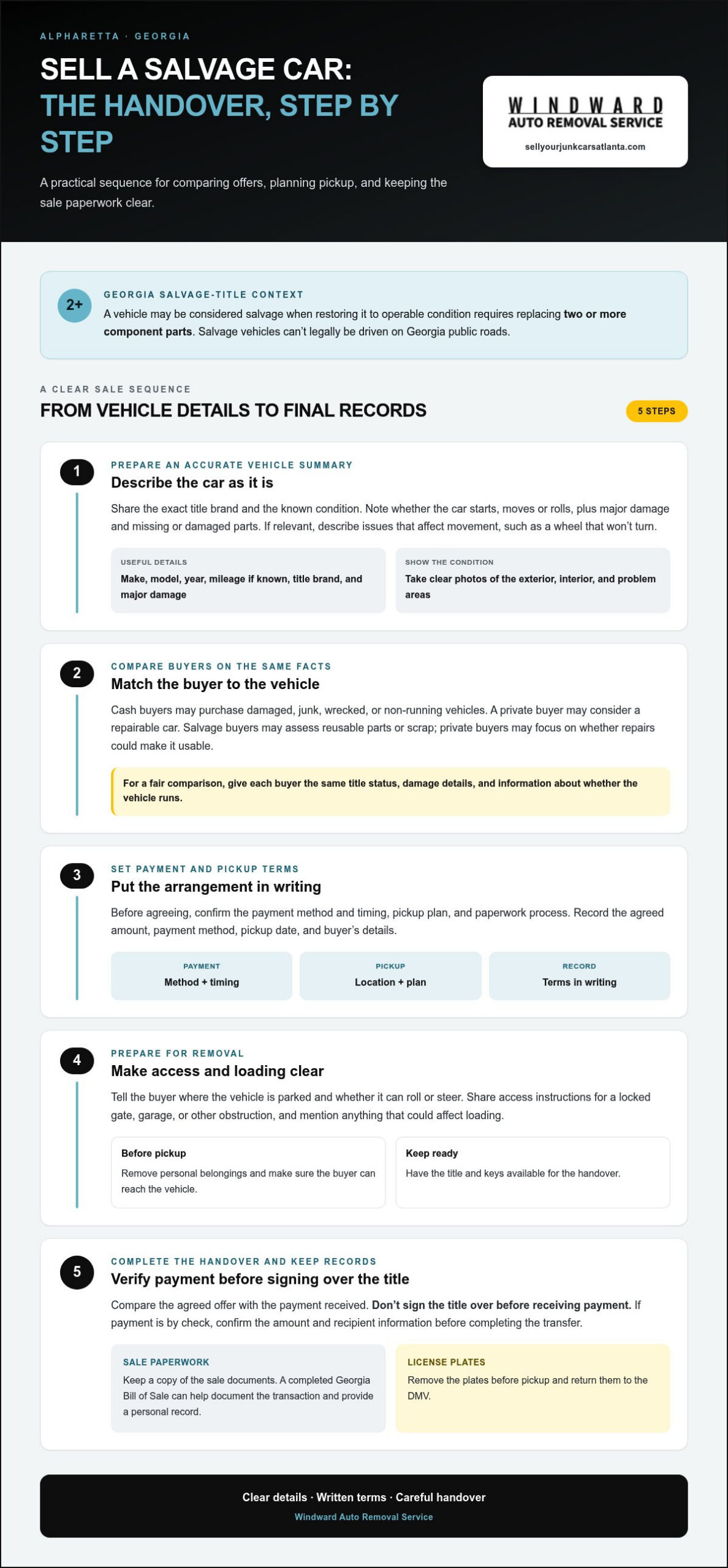
Documents needed to sell a car in Georgia
Before completing the sale, check which documents the buyer needs to transfer ownership. A completed Georgia Bill of Sale may help document the purchase and provide a personal transaction record.
Documents for a Georgia Car Sale
Gather the title, sale details, and any records that help identify the vehicle. Check that the vehicle identification number on the title matches the car. Write down the buyer’s information, sale date, and agreed amount. A completed Georgia Bill of Sale may help provide proof of purchase and serve as a personal record.
Use a simple document-preparation routine before arranging the handover:
- Locate the title and review its brand, such as “Salvage” or “Total Loss.”
- Compare the title’s vehicle identification number with the number on the car.
- Record the buyer’s name, transaction date, and agreed sale amount.
- Complete a Georgia Bill of Sale and keep a copy with your records.
Keep the paperwork consistent. For example, describe the vehicle as salvage if that brand appears on the title. If the car has fire or flood damage, distinguish its physical damage from the title wording. Clear details help both parties connect the documents to the correct vehicle and transaction.
Transferring Salvage-Title Ownership
For a salvage-title vehicle, use the title and sale paperwork to document the ownership transfer. Review the title details with the buyer, then complete the transfer paperwork accurately. A Bill of Sale can create a separate record of the transaction, but keep it with the title documents rather than treating it as the only record.
Before signing, check that the vehicle description and identifying details match the car being sold. Keep a copy of the completed sale record and note when the buyer takes possession. If the title uses a brand such as “Fire,” “Flood,” “Water,” “Salvage,” or “Total Loss,” make sure the paperwork reflects it accurately.
Organize the records together after the sale. Keep the completed Georgia Bill of Sale, a copy of the signed sale paperwork, and your handover notes in one place. Record the pickup date and buyer’s details with those documents. This gives you a clear personal record if you later need to refer to the transaction.
If you can’t locate the title, pause before promising a transfer date. Search your vehicle files and prior sale or registration records for the correct title information. Don’t tell a buyer that registration proves ownership transfer. Explain what paperwork you have, and keep the vehicle’s title brand and identification details consistent in every document.
Cash offers for junk cars
A cash offer reflects the vehicle’s condition and what remains usable or recoverable. For an Alpharetta junk car, accurate details help the buyer distinguish a damaged vehicle from a complete one.
The offer depends on the vehicle and follows a quote request. Key factors include its weight, condition, parts, and pickup needs. A complete car with reusable components differs from one with missing parts or severe collision damage. Its make and model also help buyers assess what may be salvageable.
Describe the vehicle before comparing offers. Include its year, make, model, whether it runs, and any missing or damaged components. For example, disclose a missing catalytic converter, a nonworking engine, or a car that can’t roll. Share photos of the exterior, interior, and major damage. Buyers can then respond based on consistent details.
Vehicle weight can influence scrap value, while reusable parts may affect how a buyer assesses a particular car. A compact car and a large SUV contain different amounts of material. Condition matters too: an intact component may be assessed differently from one damaged in a collision. These factors don’t create a fixed offer formula.
Compare offers on equal terms. Confirm what each buyer understands about the title, damage, and whether the vehicle moves. Ask for the amount in writing, along with any pickup or towing terms. If an offer changes after inspection, compare the revised amount with the original description and ask what prompted the change.
- Share the title brand and describe the vehicle’s current condition.
- List missing parts and explain whether it starts, rolls, and steers.
- Provide clear photos that show damage and the vehicle as a whole.
- Compare offers using the same vehicle details and pickup terms.
A high advertised figure may not apply to every vehicle. Focus on the offer for your car, not a general headline or another vehicle’s result. A compact car with extensive damage isn’t directly comparable to a complete pickup truck. Keep the assessment tied to your vehicle’s weight, condition, parts, and removal needs.
Before accepting, make sure the agreed payment and pickup arrangements match. Don’t sign the title over before receiving payment. Keep your sale paperwork and record the handover details. For a salvage or damaged vehicle, accurate information supports a clearer offer and fewer last-minute disagreements. Request a cash offer for your vehicle using its actual condition and details.
Windward Auto Removal Service: Cash for Junk Cars
Windward Auto Removal Service buys junk, used, and totaled vehicles for cash. If your salvage-title car is damaged or totaled, share its title status and condition when requesting an offer. The company also buys scrap trucks and SUVs.
Describe whether the vehicle runs, its visible damage, and any missing parts. Include its location and pickup access details so the offer reflects the actual vehicle. Windward Auto Removal Service is a practical option if you want to sell a damaged, unwanted, or totaled vehicle without arranging a private sale.
Have your title and sale paperwork ready, then review payment and pickup arrangements before handing over the vehicle. Contact Windward Auto Removal Service to discuss your vehicle.
Make Your Next Move With Confidence
Choose a buyer that matches your vehicle’s condition and the outcome you want. A salvage-title car can feel like an unfinished problem, but clear steps help you move forward. Set aside time to handle the sale deliberately rather than letting the vehicle remain another task on your list.
If you’re ready to sell a car with a salvage title in Alpharetta, Windward Auto Removal Service offers Cash for Junk Cars, Cash for Used Cars, and Cash for Totaled Vehicles. Share the vehicle’s condition and title status to start a conversation about selling it. You can move ahead at your own pace and decide whether the proposed next steps suit your situation.
Contact Windward Auto Removal Service today to discuss your vehicle. Take the next step when you’re ready, and put a clear plan in motion.
Frequently Asked Questions
How Much is My Car Worth?
Your car’s assessment depends on its make, model, condition, and scrap value. A salvage title is one part of the picture, not a standalone valuation. If you’re preparing to sell a car with a salvage title in Alpharetta, share the title brand and describe the damage clearly. A damaged vehicle with usable components may be assessed differently from a stripped car with major mechanical damage.
How can I get an instant quote for my vehicle?
Request an instant online quote from Windward Auto Removal Service, or call to discuss the vehicle. Include its make, model, condition, and title status so the quote reflects what you’re selling. “NO HIDDEN FEES PLUS FREE TOWING!” Same-day pickup and payment are available in Alpharetta. Give accurate details so the quote discussion starts with a clear picture of the vehicle.
How can you get a guaranteed offer?
A guaranteed offer is a specific amount a buyer commits to pay under stated conditions. An estimate and a commitment aren’t the same. The amount for a vehicle depends on its condition, make, model, and scrap value. Give a complete description, then read the written terms carefully. Compare them with the vehicle’s actual condition before accepting, especially if damage or missing parts could affect the assessment.
What Do I Need to Sell My Car in Alpharetta?
Prepare a government-issued ID and proof of ownership or the title when applicable. Windward Auto Removal Service requires minimal paperwork otherwise. Before starting, note the vehicle’s make, model, title brand, and major damage. For example, mention a bad transmission or that it won’t run. These details help you describe the car clearly and keep the sale discussion focused.
What companies in Alpharetta buy salvage-title cars for cash?
Windward Auto Removal Service buys vehicles in Alpharetta, including junk, used, and totaled cars. If you’re looking to sell a car with a salvage title in Alpharetta, it’s a local option to consider. Its vehicle policy states: “We accept all kinds of vehicles in almost any condition… we buy all unwanted cars and trucks, wrecked cars, bad motors, bad transmissions, not running, running, regardless of condition, location, or weather!” Share the title status and vehicle details to request an offer.
How much is a salvage-title car worth in Georgia?
There isn’t one fixed value for every salvage-title car in Georgia. The amount depends on the vehicle’s condition, make, model, and scrap value. A complete vehicle with usable components may be assessed differently from one with extensive damage or missing parts. Describe the damage honestly and include the title brand when requesting an offer. A vehicle-specific assessment is more useful than a general estimate.
How can I estimate the value of a salvage car before selling it?
Start by recording the make, model, title brand, and condition. Note whether the engine runs, whether the car moves, and which major components are damaged or missing. Photos of the exterior, interior, and problem areas make the description more specific. Then request a vehicle-specific quote and compare offers based on the same details. The car’s condition, make, model, and scrap value all affect its assessment.
What documents are required to sell a salvage-title car in Georgia?
Prepare a government-issued ID and proof of ownership or the title when applicable. Windward Auto Removal Service requires minimal paperwork otherwise. A completed Georgia Bill of Sale may help provide proof of purchase and serve as your personal transaction record. Keep your copy with your sale notes. Make sure the documents identify the vehicle you’re selling and accurately reflect its salvage-title status.