
Removing Personal Items Before Scrapping a Car: What to Check
Leftover items can mean more than a frustrating loss. Batteries and fuel may pose environmental and safety concerns, so removing personal items before scrapping a car means checking carefully for both belongings and anything that could affect safe handling.
Before pickup, remove valuables, paperwork, electronics, access devices, and anything else you want to keep. Items left inside can be missed during processing, so take a final look for personal documents and useful belongings before handing over the vehicle.
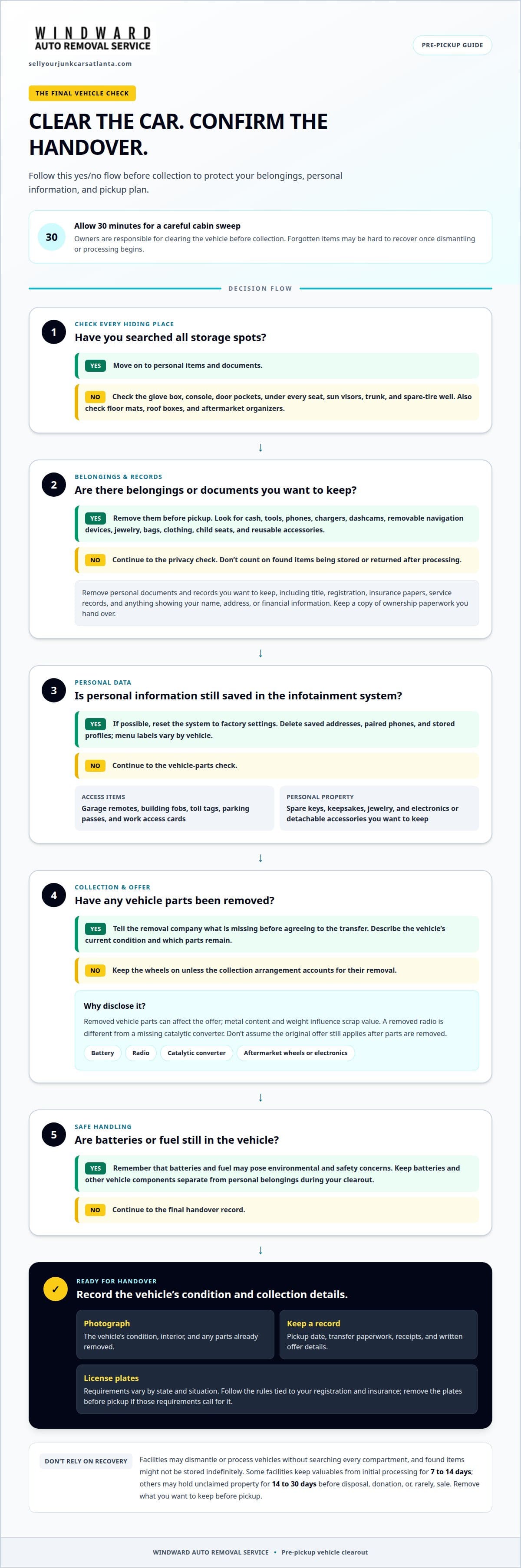
A quick sweep can miss more than you think. Check the trunk, glove box, console, door pockets, under the seats, sun visors, and spare-tire well. Look for saved addresses and paired phones in the infotainment system, as well as remotes, parking passes, and work access cards. This guide explains what to remove, what may happen to items left behind, and what to check before pickup, including parts that could affect collection.
Key Takeaways
- Make a second pass before pickup, and reset the infotainment system to remove saved addresses, linked phones, and personal profiles.
- Don’t assume anything left inside will be found or returned; remove belongings and records you want to keep before handover.
- Before taking off major parts, tell the removal company what’s been removed and check whether the vehicle can still be collected.
- Look beyond personal belongings: batteries and fuel can create environmental and safety concerns if left in the vehicle.
Cash, tools, phones, and electronics left in vehicles
Removing personal items before scrapping a car starts with a careful cabin sweep. Allow 30 minutes, and check for cash, loose change, tools, phones, chargers, dashcams, and removable navigation devices. Forgotten belongings can be hidden behind panels or beneath seats, where dismantling may make recovery difficult. Owners are responsible for clearing the vehicle before collection.
Check the glove box, center console, door pockets, under every seat, sun visors, trunk, and spare-tire well. Remove documents with your name, address, or financial information, along with the title, registration, insurance papers, and service records you want to keep. Retain a copy of any ownership paperwork you hand over.
Are there state rules for removing license plates before scrapping a car? Requirements vary by state and situation, so follow the rules tied to your registration and insurance. Remove the plates before pickup if those requirements call for it.
How do I erase personal data from a car’s infotainment system before scrapping it? If possible, use the settings to reset the system to factory settings. Delete saved addresses, paired phones, and stored profiles. Menu labels vary by vehicle.
Removing personal items before scrapping a car also means keeping a record of the handover. Photograph the vehicle’s condition, interior, and any parts already removed. Record the pickup date, and keep copies of transfer paperwork or receipts.
Use this checklist, then make a second sweep:
- Open storage compartments and check beneath floor mats for small items.
- Remove garage remotes, building fobs, toll tags, parking passes, and work access cards.
- Take out electronics, cables, and detachable accessories you want to keep.
- Review paperwork for personal information before leaving it in the vehicle.
What Happens to Your Personal Items Left in Scrapped Cars?
Remove personal belongings before pickup; don’t count on recovery afterward. Facilities may dismantle or process a vehicle without searching every compartment, and found items might not be stored indefinitely. Some facilities keep valuables found during initial processing for 7 to 14 days. Others may hold unclaimed property for 14 to 30 days before disposal, donation, or, rarely, sale.
What personal items should you remove before scrapping a car? Take out cash, tools, phones, electronics, documents, jewelry, and anything else you want to keep. Check roof boxes and aftermarket organizers, too, as belongings there can be overlooked during a final cabin check.
Do a focused sweep for commonly forgotten items. Check the spare-tire well for keepsakes, the visor for cards, and the trunk for bags or camping gear. Look for a magnetic hide-a-key box, quick-pass sticker, parking permit, or neighborhood decal. Remove your license and access cards, too, if you keep them in the vehicle.
Small valuables can be difficult to spot once a car enters processing. A ring beside a seat, a key under a mat, or a tool tucked into a door pocket may be missed. Remove sentimental items yourself, even if they seem securely stored. Don’t rely on the facility’s handling process to recover belongings later.
Keep batteries and other vehicle components separate from personal belongings during your clearout. Don’t leave paperwork with identifying details in the vehicle, either. A title, service record, or insurance document can reveal information you may prefer to keep private.
- Remove bags, clothing, child seats, and reusable accessories.
- Check roof boxes and removable organizers for belongings.
- Look for jewelry, spare keys, and small valuables in overlooked spots.
- Take parking permits, access cards, and personal documents.
Once the vehicle is empty, a clear handover is easier to manage. If you’re preparing to scrap your car, finish the belongings check before collection begins.
Checking with the scrap removal company before removing parts
Tell the removal company about parts you’ve taken off before arranging collection. Removing key components can affect pickup, especially if the vehicle can’t be moved or loaded as planned. Keep the wheels on unless the collection arrangement accounts for their removal.
Will removing parts or personal items reduce a scrap car’s value? Personal belongings are separate from the vehicle’s scrap value, but removed vehicle parts can affect the offer. Metal content and weight influence scrap value, so disclose missing components before agreeing to the transfer.
When comparing scrap-car offers, provide the same details for each vehicle, including its condition and which parts remain. Describe missing items clearly: a removed radio is different from a missing catalytic converter. A catalytic converter contains platinum, rhodium, and palladium, so removing it may affect the remaining scrap value. Don’t assume the original offer still applies after parts are removed.
Check hidden storage and aftermarket accessories before collection. Search door pockets, under seats, the trunk, and added storage compartments for belongings. Separately identify items such as an upgraded stereo, dashcam, or alloy wheels. Tell the company which accessories or components are staying with the vehicle, so the collection plan and offer reflect its actual condition.
- List the parts removed, such as a battery, radio, or catalytic converter.
- Describe accessories that remain, including aftermarket wheels or electronics.
- Share the vehicle’s current condition and registration details for the collection record.
- Keep a copy of transfer paperwork and any written offer details.
Clear information helps avoid mismatched expectations at pickup. If the vehicle’s wheels have been removed, for example, say so before collection rather than waiting for the driver to arrive. Give the same accurate details when comparing offers, since included parts, vehicle condition, and collection arrangements can affect what each offer covers.
Environmental and safety risks from leftover items
A forgotten item can create a different problem from a lost phone or tool. Fuel and batteries are vehicle components that can pose environmental and safety risks if left behind. Identify them during your clearout, and tell the removal company about visible leaks or damage rather than handling a hazardous condition yourself.
Start with a deliberate inspection of the cabin and storage areas. Check door pockets, the trunk, under seats, and behind removable organizers for loose containers, batteries, or items that could spill or break during movement. Remove ordinary personal belongings separately. Keep documents with identifying details out of the vehicle to reduce identity risks.
Use this focused checklist before pickup:
- Look for fuel containers or other loose liquids, and don’t leave them among personal items.
- Check for detached batteries or visible damage; report a concern rather than attempting risky removal.
- Remove glass bottles and fragile containers that could break inside the cabin.
- Inspect behind organizers and beneath mats for forgotten items.
- Keep paperwork and personal electronics separate from vehicle components.
Vehicle materials need to be handled appropriately for recycling. A battery or fuel left among loose belongings can complicate the clearout and create a hazard during movement or processing. Don’t use the trunk to store leftover liquids or components. If you find a damaged battery or spilled fluid, step away and tell the removal company where it is before collection.
Finish with a second pass through the vehicle. Confirm that the cabin, trunk, and door pockets contain no personal property or loose materials. This final check protects your belongings and gives the collection team useful information about conditions that need attention. It also helps keep personal papers out of the vehicle’s recycling stream.
Ready to arrange vehicle removal? Contact Windward Auto Removal Service to arrange to scrap your car after identifying any remaining hazards and personal items.
Windward Auto Removal Service
Windward Auto Removal Service helps owners move forward when an unwanted vehicle is ready to go, after personal items and paperwork have been cleared. Its vehicle-buying options include Cash for Junk Cars, Cash for Used Cars, Cash for Totaled Vehicles, and Cash for Scrap Trucks and SUVs.
Whether you’re dealing with a damaged car, an older vehicle, or a truck or SUV ready for removal, sorting belongings first helps keep the handover focused on the vehicle. Make a final sweep, note any parts already removed, and have the vehicle details ready when arranging the next step.
For a vehicle you’re ready to sell or scrap, contact Windward Auto Removal Service to discuss the next step.
Make the Handover Your Next Clear Step
Make the clearout a clean transition, not another loose end. Before collection, set aside the records you’ll need afterward and decide who will handle any remaining vehicle-related tasks. A simple plan keeps the handover from getting tangled with errands or forgotten follow-ups.
Removing personal items before scrapping a car is also a useful prompt to close out the vehicle’s place in your routine. Move essential items to a new home, update personal arrangements tied to the car, and keep transfer details together. That way, the vehicle can leave without leaving unfinished business behind.
When you’re ready to take the next step, contact Windward Auto Removal Service to discuss your vehicle. A clear plan makes moving forward easier. You’ve handled the details; now you can focus on what comes next.
Frequently Asked Questions
What do I need before scrapping my car?
Have government-issued identification and proof of ownership or a title if required for the transaction. Keep the vehicle’s identifying details handy, and note whether it runs or has parts removed. If you’re selling in Alpharetta, Windward Auto Removal Service buys junk, used, and totaled vehicles; the exact paperwork depends on the ownership documents available.
How do I check a car for hidden valuables before scrapping it?
Use a flashlight and inspect the vehicle systematically, moving from the front cabin toward the rear and trunk. Look inside seatback map pockets, beneath removable cargo-floor panels, and around child-seat areas. Empty storage spaces rather than glancing inside. Keep a short checklist and mark each area as you inspect it, so you don’t circle back or skip a compartment.
What documents and license plates should I remove before scrapping a car?
Take out personal records you want to keep, such as the title, registration, insurance papers, and service history. Keep a copy of transfer paperwork for your records. License-plate requirements vary by state and situation, so follow the rules tied to your registration and insurance before pickup. Remove the plates if those requirements call for it.
Should I remove the electronic toll tag, garage opener, and dashcam before scrapping a car?
Yes. Remove the toll tag, garage opener, and dashcam, along with any building fobs or work access cards. A toll tag may be linked to an account, so follow its provider’s instructions for transferring or closing that connection. Take the dashcam’s memory card, too, if it stores footage you want to keep.
Can I remove parts or accessories before selling a car to a scrapyard?
You can remove personal accessories, but tell the removal company about vehicle parts already taken off before collection. A missing battery, stereo, or wheel can affect how the vehicle is moved, loaded, and assessed. Don’t remove key components without discussing the change with the removal company first. Make the vehicle’s condition clear so the collection plan reflects what remains.
What should I do with personal belongings left in a scrapped car?
Contact the facility handling the vehicle as soon as you realize something was left behind. Describe the item, where it was stored, and the vehicle’s make, model, and identifying details. Include a useful detail, such as a distinctive keychain or bag color. Don’t assume the item will be found or held; prompt, specific information helps staff identify what you mean.