
Sell a Car With a TPMS Light On in Alpharetta
A TPMS light doesn’t automatically prevent you from selling your car. It indicates low tire pressure or pressure below the vehicle manufacturer’s recommended level. If you want to sell your car with a TPMS light on in Alpharetta, disclose the warning and consider selling the vehicle in its current condition.
The light may point to tire pressure that needs attention, so it’s understandable to wonder whether you should fix the issue first. This guide explains what the warning means and what to consider when deciding whether to repair it or sell as-is. You’ll also learn what customer reviews say about the experience of selling a car with the light on in Alpharetta. Get a clear picture of the warning, the sale decision, and the details that can help you move forward.
Key Takeaways
- Understand what a TPMS warning can indicate and why the light alone doesn’t explain the full condition of the car.
- Weigh whether to address the warning or disclose it and sell the vehicle as-is.
- Learn which vehicle and condition details can shape a professional buyer’s offer.
- See what to consider about disclosure in Georgia and when selling your car may be the practical next step.
Should I fix the TPMS light before selling my car to a professional buyer, or disclose it and sell as-is?
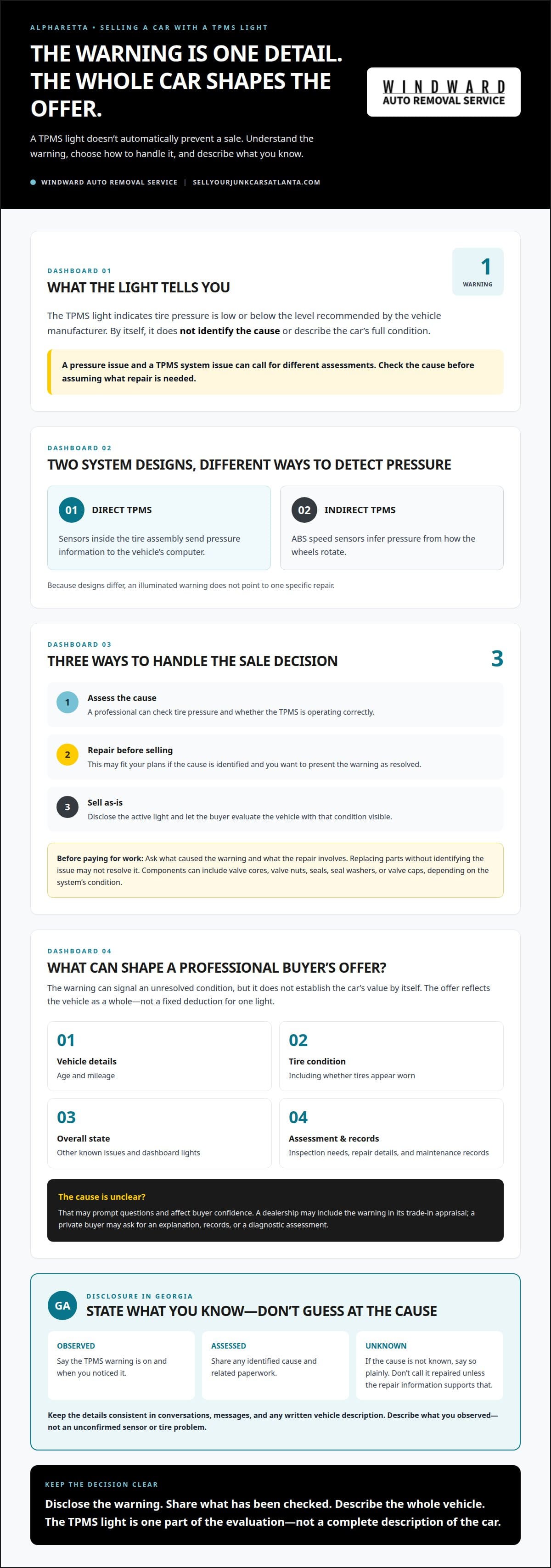
You don’t automatically need to repair a TPMS warning before selling. The light indicates low tire pressure or pressure below the vehicle manufacturer’s recommended level. A professional assessment can help distinguish a pressure issue from a TPMS system problem. Either way, disclose the active warning during the sale discussion so the buyer can assess the car based on its actual condition.
The right choice depends on what is causing the warning and your sale priorities. If a tire needs air, restoring its pressure to the manufacturer’s specified level may resolve the warning. If the light stays on, the TPMS itself may need attention. A professional can check the pressure and assess whether the system is operating correctly before you decide whether to pay for repairs.
TPMS designs differ, so the warning does not point to one specific repair. A direct system uses sensors inside the tire assembly to send pressure information to the vehicle’s computer. An indirect system uses ABS speed sensors to infer pressure from wheel rotation. That’s why identifying the cause is more useful than assuming every illuminated warning means the same thing.
- Consider assessment first: A professional can check pressure and TPMS operation.
- Repair before selling: This can make sense when the cause is identified and you want to present a resolved warning.
- Sell as-is: Disclose the light and let the buyer evaluate the vehicle with that condition visible.
Some TPMS maintenance involves components such as valve cores, valve nuts, seals, seal washers, or valve caps. The exact need depends on the system’s condition. Replacing parts without identifying the issue can mean paying for work that doesn’t resolve the warning. Ask what caused it and what the repair involves before deciding whether the expense fits your sale plans.
For example, a car with a warning after a pressure change needs a different assessment from one whose light remains on after the pressure is corrected. A buyer can consider the active warning alongside the vehicle’s overall condition. The light is one detail in that evaluation, not a complete description of the car.
If you’re deciding whether to sell my car with a TPMS light on in Alpharetta, weigh the repair decision against your priorities. Selling as-is avoids arranging TPMS work first, while repairing lets you present the warning as resolved if the repair succeeds. Either way, describe what you know, share any assessment or repair details, and don’t say an unresolved warning is fixed.
How does a TPMS warning light affect the offer from a professional car buyer?
A TPMS light can affect an offer because it signals an unresolved condition, but it doesn’t establish the car’s full value by itself. A buyer considers the warning alongside the vehicle’s age, mileage, tire condition, and overall state. For example, a car with sound tires and a single dashboard warning presents differently from one with worn tires and other problems.
The assessment focuses on what the warning may mean for the vehicle. A buyer may account for inspection needs, possible repair work, and the effort required to prepare the car for its next use. The final offer reflects the car as a whole, not a fixed deduction for one illuminated light. No single adjustment applies to every make, model, or condition.
Trade-in and private-sale buyers can respond differently. A dealership may consider the TPMS warning as part of its trade-in appraisal and the vehicle it plans to accept. A private buyer may ask for an explanation, maintenance records, or a diagnostic assessment. In either case, an unclear cause can prompt questions and affect the buyer’s confidence.
Use a clear, factual description when discussing the vehicle. State that the TPMS light is on, when you noticed it, and what assessment or repair has been completed. For example, if a technician identified a sensor issue, share that finding rather than saying the tires are the problem. If no cause has been identified, describe only what you know.
Other condition details help put the warning in context. A buyer may consider whether the tires appear worn, whether other dashboard lights are on, and whether service records show recent maintenance. Records of routine care can provide useful context; missing records may leave questions for the assessment. Don’t treat a repaired tire or replaced part as proof that the warning is resolved unless it is.
- Share the warning clearly: Identify the TPMS light during the initial vehicle discussion.
- Provide relevant records: Include any assessment or repair information tied to the warning.
- Describe the whole vehicle: Mention other known condition issues that may shape the buyer’s evaluation.
For sellers weighing a professional offer against a private sale, compare the process as well as the vehicle assessment. A private buyer may need more discussion about the warning, while a professional evaluation considers it alongside the car’s overall condition. Explore local car-selling options as you decide which route fits your priorities.
What must Georgia sellers disclose when selling a used car with a known TPMS problem?
For a Georgia used-car sale, clearly tell the buyer about a known TPMS warning. Describe what you observed, not what you assume caused it. A dashboard light is a specific condition; an unconfirmed sensor failure is only a possibility. Keep those details separate in conversations, messages, and any written vehicle description.
Be precise about the warning’s history. For example, say whether it appeared before the sale, remains illuminated, or returned after an assessment. If a technician identified a cause, share the finding and any related paperwork. If the cause remains unknown, say so plainly. Don’t describe the issue as repaired unless the repair information supports that statement.
Use a simple written note or message to keep the details consistent. Identify the dashboard warning, when you noticed it, and any assessment or repair records you’re sharing. If you discuss the warning by phone, follow up with the same facts in writing. This gives both sides a clear reference during the sale.
- State the observable issue: The TPMS warning light is on, or it appeared during a specific period.
- Share known findings: Include a technician’s diagnosis or repair record if you have one.
- Separate facts from guesses: Don’t label the cause as low pressure, a sensor, or another fault without support.
- Keep the description consistent: Match your messages and written vehicle details to what you know.
For example, a seller might write: “The TPMS warning light is illuminated. A technician’s assessment identified a sensor concern, and the assessment is available.” If there’s no assessment, a more accurate note would be: “The TPMS warning light is illuminated; I don’t have a diagnosis.” These examples describe communication, not a legal form or a complete statement of Georgia law.
Disclosure doesn’t mean diagnosing the vehicle yourself. It means giving the buyer known facts and relevant records without overstating what they prove. A repair receipt can document work performed, while an active dashboard warning describes the vehicle’s current condition. Keep both details clear if they differ.
Georgia sellers with questions about a vehicle’s condition can explore selling options and share the TPMS information as part of the discussion. Straightforward details help the buyer understand what is known before evaluating the car.
When a TPMS warning light comes on, drivers should check tire pressure and inflate the affected tire to the manufacturer’s specified level. If you took that step, describe only what you actually checked or did, and keep any record available to share. Don’t present it as proof that the warning has cleared or that its cause has been identified. If you didn’t check the pressure, avoid implying that you did. This keeps a pressure check separate from a diagnosis and limits your account to actions and findings you can support.
Windward Auto Removal Service: Sell my car
Windward Auto Removal Service helps you sell your car when a TPMS warning is part of its condition. You can disclose the illuminated light and the information you have, then consider selling without arranging a repair first. The vehicle’s overall condition helps inform its evaluation.
This option can suit Alpharetta owners who want to sell a used car with a warning light, or move on from a totaled vehicle. Share the TPMS details accurately, including any assessment or repair records. Clear information gives the buyer useful context about the car.
If you’re ready to discuss selling your vehicle, contact Windward Auto Removal Service.
Choose Your Next Step With Confidence
Make the sale fit your plans, not the warning light. If you’re looking to sell your car with a TPMS light on in Alpharetta, focus on sharing accurate vehicle details and choosing a sale route that suits its condition. A straightforward conversation can help you move from uncertainty to a clear next step.
Windward Auto Removal Service offers Cash for Junk Cars, Cash for Used Cars, and Cash for Totaled Vehicles. That gives you options for discussing a vehicle with a warning light, whether it remains usable or has broader condition issues. Describe what you know about the car, then decide whether you’re ready to proceed.
Contact Windward Auto Removal Service to discuss selling your vehicle. Take the next step when you’re ready.
Frequently Asked Questions
Can I sell a car in Georgia with the TPMS warning light on?
Yes, a TPMS warning light does not by itself prevent you from offering your car for sale in Georgia. Be direct about the illuminated dashboard warning when discussing the vehicle. If the light is on but you haven’t had the cause diagnosed, describe the warning without naming a specific fault. This keeps your description accurate for prospective buyers in Alpharetta.