
Sell a Car With a Broken Timing Belt in Alpharetta
A broken timing belt doesn’t automatically make your car worthless. If you want to sell your car with a broken timing belt in Alpharetta, the engine type matters: in an interference engine, a failed belt can let the pistons and valves collide.
That damage can mean a substantial repair, so weigh your options before spending more on the car. Timing-belt failure doesn’t damage every engine in the same way, and the vehicle’s overall condition affects whether repairing or selling makes more sense.
Learn how interference and non-interference engines affect potential damage, what influences repair costs, and what to consider when selling a car in Alpharetta. If repairs no longer fit your plans, selling the vehicle for cash may be a practical next step.
Key Takeaways
- Estimate your car’s value by weighing its condition, engine damage, and the cost of restoring it to running order.
- Use the likely repair scope and your plans for the vehicle to decide whether fixing it or selling it makes more sense.
- Prepare the Georgia sale paperwork so the ownership transfer can move forward smoothly.
- Consider selling the vehicle as-is when you want to move on without taking on the repair; Windward Auto Removal Service buys junk, used, and totaled vehicles.
What is a car worth with a broken timing belt in Alpharetta?
There’s no single value for every car with a broken timing belt in Alpharetta. An estimate depends on the make, model, year, mileage, overall condition, and the extent of any engine damage. A newer car with a clean interior and sound body may be worth more than a similar vehicle with collision damage or worn components. The belt failure matters, but it isn’t the only factor.
Consider the car’s condition before the belt broke. A vehicle that drove well, had no major warning signs, and has consistent maintenance records offers a clearer picture than one with existing engine trouble. Engine design matters, too. In an interference engine, a broken belt can let pistons and valves collide, potentially adding damage beyond the belt repair. A non-interference engine avoids that specific collision risk, but still needs a belt repair before it can run normally.
Timing belt history helps put the failure in context. Manufacturers generally recommend replacement between 60,000 and 100,000 miles, depending on the vehicle and driving conditions. Some also set replacement intervals by age, typically after 7-10 years. A maintenance record showing a recent replacement differs from a car whose belt history is unknown. Metal timing chains typically last longer than reinforced-rubber timing belts, which need periodic replacement.
For a practical estimate, separate the car’s potential value from the decision to repair it:
- Record the vehicle details: note its year, model, mileage, trim, and condition before the failure.
- Identify the likely damage: distinguish a belt replacement from possible internal engine work.
Water-pump figures describe possible repair considerations, not a guaranteed change in the car’s sale value. A buyer considers the vehicle’s condition and potential repair scope alongside its usefulness or resale potential. Missing maintenance records, warning lights, fluid leaks, and body damage may also affect an estimate. Share what you know, but don’t present a repair guess as a confirmed diagnosis.
If you plan to sell, describe the timing-belt failure accurately and share known symptoms, such as whether the engine stopped while driving. Don’t describe the car as running just because it started before the belt failed. When selling a car with a broken timing belt in Alpharetta, compare its value in its current condition with the cost and uncertainty of repairs.
Is it better to repair or sell a car with a broken timing belt?
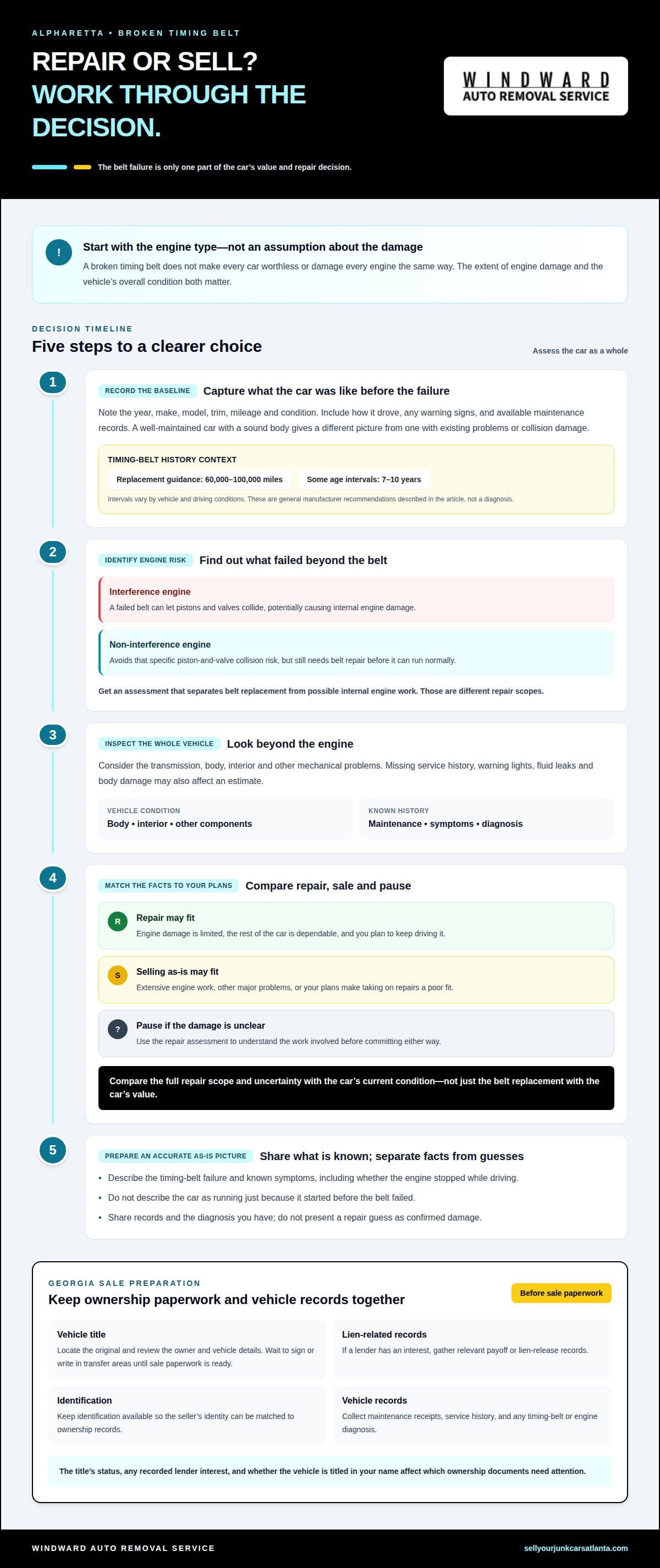
Compare the repair plan with the car’s condition and your goals. Repairing may make sense if engine damage is limited, the rest of the vehicle is dependable, and you plan to keep driving it. Selling may be more practical if the engine needs extensive work, the car has other major problems, or you don’t want to take on uncertain repairs. The right choice depends on the whole vehicle, not just the belt.
Engine design is a key factor. In an interference engine, a broken timing belt can let pistons and valves collide. That makes a prompt diagnosis important: replacing a belt and repairing internal engine damage are very different jobs. A non-interference engine avoids that specific piston-and-valve collision when timing is lost, but the vehicle still needs repairs before normal driving.
Use a straightforward comparison before deciding. First, get a repair assessment that separates belt work from any internal engine damage. Then consider the car’s condition beyond the engine, including its transmission, body, interior, and other mechanical problems. Finally, weigh the repair against your plans. A car you intend to keep and rely on involves a different calculation from one you were already preparing to replace.
- Repair: Consider this route when the engine damage is limited and the rest of the car meets your needs.
- Sell: Consider an as-is sale when extensive engine work or other existing faults make repair a poor fit for your plans.
- Pause: If the damage is unclear, use the repair assessment to understand the work involved before committing to either option.
For example, repairing a well-maintained car with a failed belt and limited engine damage may make sense if you want to keep it. If a diagnosis confirms internal damage and the car has other major issues, moving on without paying for extensive repairs may be more practical. Don’t compare only the belt replacement cost with the car’s value. Consider the full repair scope, the vehicle’s overall condition, and what you want to do next.
If repairing the car doesn’t fit your plans, an as-is sale is another option. Review the vehicle details and sell the car as-is rather than taking on engine work you don’t want.
What documents are required to sell a car in Georgia?
For a Georgia vehicle sale, gather the ownership paperwork first. The title identifies the vehicle and records a change in ownership. The paperwork needed depends on the title’s status, whether a lender has a recorded interest, and whether the vehicle is titled in your name. A broken timing belt doesn’t remove the need to handle ownership documents.
Gather the relevant items before arranging the sale. Keeping them together makes it easier to provide accurate vehicle details and complete the transaction paperwork:
- Vehicle title: Locate the original title and review its owner and vehicle details. Don’t write in a signature or transfer area until the sale paperwork is ready.
- Lien-related paperwork: If a lender has an interest in the vehicle, gather the relevant payoff or lien-release records. The title’s lien status affects what ownership documents need attention.
- Identification: Keep your identification available so the seller’s identity can be matched to the ownership records.
- Vehicle records: Collect maintenance receipts, service history, and any timing belt or engine diagnosis. These records help describe the car’s condition accurately.
- Sale details: Have the vehicle identification number, current odometer reading, and agreed transaction details ready for the transfer documents.
Check that the vehicle details match on the title and sale records. The vehicle identification number should refer to the same car, and the seller’s details should match the ownership paperwork. If the title lists a lender, don’t assume that interest has disappeared because the engine no longer runs. Keep any lender correspondence with the title documents.
In the sale paperwork, describe the engine condition plainly. Note whether the belt failed, whether the engine was inspected, and what symptoms occurred. For example, “engine stopped after timing belt failure; internal damage not assessed” is clearer than saying the car runs. Include repair records if an assessment has identified engine damage.
Before signing, review each field and follow the document’s instructions. Keep a copy or image of the completed sale records. Don’t leave transfer fields blank or change ownership details to simplify the paperwork. If the title is missing, contains an error, or shows a lien, resolve the issue through the appropriate Georgia title process before treating the transfer as complete. Organized records help keep the vehicle’s condition and ownership details clear.
Use the title to record the ownership change. Complete the transfer information when the sale paperwork is ready, confirm that the vehicle and seller details match, and keep a copy of the completed sale records.
Windward Auto Removal Service: Sell my car
If you’ve decided not to fund a timing-belt repair, Windward Auto Removal Service buys vehicles in Alpharetta, including junk and totaled cars. When engine damage or the car’s overall condition makes keeping it a poor fit, selling can help you move on without arranging the repair yourself. The service includes free towing and immediate cash payment, with NO HIDDEN FEES PLUS FREE TOWING!
Share clear details about the vehicle, including its make, model, mileage, title status, and known timing-belt symptoms. Accurate information helps describe what you’re selling and its condition. Windward Auto Removal Service also buys scrap trucks and SUVs, plus vans and fleet vehicles, so owners of those vehicles can explore the relevant option.
Contact Windward Auto Removal Service to discuss selling your vehicle.
Choose your next step and move forward
A timing-belt failure can force an unexpected decision, but you can choose your next step deliberately. Decide whether to invest in repairs or move on, and keep the vehicle’s condition and ownership details clear. If selling suits your plans, Windward Auto Removal Service buys junk, used, and totaled vehicles, with free towing and immediate cash payment.
Ready to sell your car with a broken timing belt in Alpharetta? Gather the vehicle details and ownership paperwork, then share what you know about the belt failure and the car’s condition with Windward Auto Removal Service. Its free towing and immediate cash payment make selling a non-running vehicle straightforward, with NO HIDDEN FEES PLUS FREE TOWING!
Contact Windward Auto Removal Service to discuss selling your car. Make the decision that fits your plans, and move forward with confidence.
Frequently Asked Questions
Can I sell a car with a broken timing belt in Georgia?
Yes, a broken timing belt doesn’t prevent you from selling the vehicle in Georgia. Disclose the failure and describe any symptoms or diagnosis you know. Have the ownership documents ready, including a government-issued ID and, when required, proof of ownership or the title. Complete the sale paperwork accurately and make clear whether the engine runs, stopped, or has known internal damage.
Where can I sell a car with a broken timing belt near Alpharetta?
Windward Auto Removal Service buys vehicles in Alpharetta, including cars with serious damage. Its cash offers cover junk, used, and totaled vehicles in a range of conditions. For a non-running car, the service includes NO HIDDEN FEES PLUS FREE TOWING! Share what you know about the belt failure and the vehicle’s condition so it can be described accurately.
Which Alpharetta junk car buyers accept cars that do not run?
Windward Auto Removal Service buys non-running vehicles, so a car that can’t be driven can still be considered for sale in Alpharetta. Explain whether the engine stopped after the belt failed and share any diagnosis you have. The service includes NO HIDDEN FEES PLUS FREE TOWING!, helping with removal when the car can’t reach a buyer under its own power.
How do cash-for-cars offers compare with private-party sales for a car needing major repairs?
With a private-party sale, you find a buyer and explain the repair needs during the sale discussion. A cash-for-cars sale offers a direct way to sell a vehicle in its current condition. For example, if a sedan needs major engine work, selling it without first arranging repairs may help you avoid spending money just to prepare it for sale.
What are the risks of driving a car after its timing belt breaks?
Don’t drive or restart the engine after the belt breaks. In an interference engine, lost timing can let pistons and valves collide and cause internal damage. A broken belt also prevents normal engine operation. Arrange another way to move the car, and explain the failure when organizing its removal or sale.
How can I get the best offer for a broken-down car in Alpharetta?
Give the buyer a clear, consistent account of the car’s condition. Distinguish what you observed, such as the engine stopping, from damage confirmed by a diagnosis. Mention any repair assessment and work already completed, but don’t guess about internal damage. Accurate details help the buyer assess the actual vehicle rather than rely on assumptions about the timing-belt failure.