Sell Your Car in Alpharetta With a Check Fuel Cap Light
A check fuel cap light doesn’t automatically prevent you from selling your car in Alpharetta. If you want to sell your car with a check fuel cap light on in Alpharetta, the cause of the warning and the vehicle’s overall condition can affect its assessment. A loose or missing cap may be the issue, but an EVAP leak or faulty component can also trigger the warning.
Uncertainty about the cause can make selling feel like one more problem to solve. You don’t have to assume the car is worthless or that the warning has an obvious explanation.
Learn how fuel-cap and EVAP issues can affect a sale, what to consider before selling as-is, and how a buyer of used, junk, or totaled vehicles can help you move forward. A dashboard light is one part of the picture, not the whole story.
Key Takeaways
- Learn how a loose cap, a damaged seal, or an EVAP fault may lead to a fuel-cap warning and what the warning can signal.
- See what factors can help weigh addressing the warning before a sale against selling the vehicle as-is.
- Understand why a check-engine light can affect an emissions test in Georgia and what warning details to disclose during a sale.
- Find out when selling your used, junk, or totaled vehicle to Windward Auto Removal Service may be a practical next step.
Loose or missing fuel caps
A loose, missing, or damaged gas cap can trigger a check-engine warning by allowing an EVAP leak. For a sale in Georgia, have your ownership documents and any maintenance or diagnostic records ready, and clearly describe the warning and any symptoms.
Loose and Damaged Cap Concerns
A missing, loose, or damaged cap may not seal the fuel system properly. Its gasket matters too: a missing, worn, or excessively dirty gasket can cause an EVAP leak. Note whether the cap is present and whether its seal appears damaged. These details can help explain what a buyer may need to assess.
The warning alone doesn’t identify the failed part. Vehicle onboard diagnostics turn on the check-engine light when the computer detects an issue that needs attention. An OBD2 scanner can help identify a loose cap as the cause of a general check-engine warning. Diagnostic tools can also read trouble codes and support broader system checks, according to the U.S. Environmental Protection Agency.
If the warning stays on, the cause may be more than the cap. Cracked or loose hoses, a faulty purge valve, or a leaking charcoal canister can also affect the EVAP system, which is designed to prevent fuel vapors from escaping into the atmosphere. An assessment can help distinguish a cap-related issue from a component problem rather than treating every warning as the same fault.
How a professional buyer handles a fuel cap warning disclosed by the seller
A buyer considers the disclosed warning alongside the vehicle’s condition and any diagnostic information. A loose or damaged cap may offer a useful clue, while a code pointing to another EVAP component may call for a broader assessment. Be clear about what you know, and don’t present a suspected cause as a confirmed diagnosis.
Repairing the issue before selling and disclosing it in an as-is sale are different options. Consider the likely cause, the vehicle’s overall condition, and whether the warning affects its use or emissions-test status. A persistent warning can accompany difficult starts, rough idling, poor engine performance, or reduced fuel economy. Share any symptoms with the buyer.
To keep the sale discussion clear, have these details ready:
- Whether the cap is missing, loose, or visibly damaged.
- When the warning appeared and whether it remains illuminated.
- Any related symptoms, such as rough idle or difficult starts.
- Available diagnostic codes or records describing earlier assessments.
For a Georgia sale, keep ownership paperwork and relevant records together. Share whether the warning remains on and describe any known symptoms before agreeing to sell. Clear information helps a buyer assess the vehicle as presented, whether you address the issue first or sell as-is.
A loose or damaged gas cap is a common cause of a check-engine light, but that alone doesn’t confirm the source of a persistent warning.
Should a professional buyer recommend repairing the fuel cap warning or accepting the car as-is?
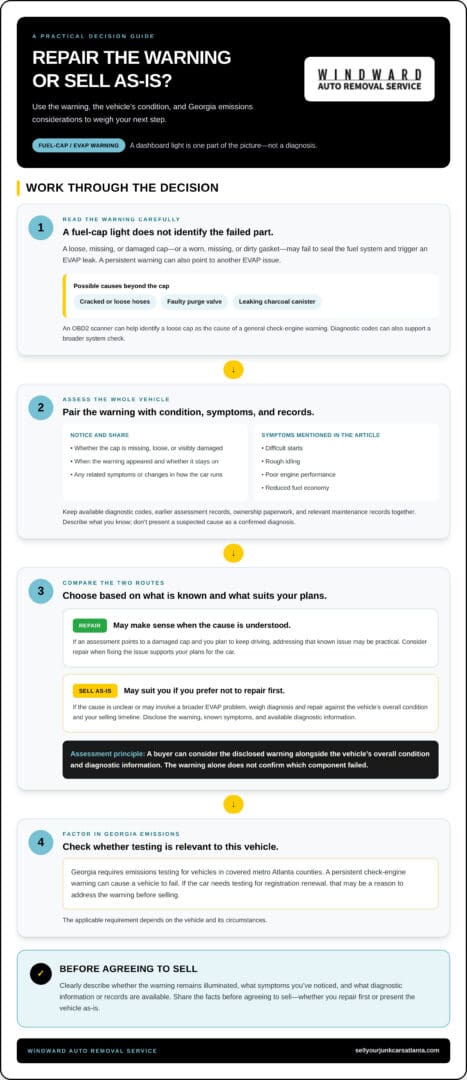
There isn’t one right choice for every vehicle. Before deciding between repair and an as-is sale, consider the likely cause, the car’s condition, any related symptoms, and whether emissions testing matters. If you want to sell your car with a check fuel cap light on in Alpharetta, these details can help you choose your next step.
Start with what the warning actually tells you. A loose or damaged cap may be a simpler issue than a cracked EVAP hose, faulty purge valve, or leaking charcoal canister. A diagnostic code may help narrow down the possibilities, but the warning alone doesn’t prove which component has failed. If the car also has difficult starts, rough idling, or poor engine performance, include those details in the assessment.
Repair may make sense when the issue is understood and fixing it supports your plans for the car. For example, if an assessment points to a damaged cap and you plan to keep driving, addressing that known issue may be practical. If the cause remains unclear or involves a broader EVAP problem, weigh further diagnosis and repair against the vehicle’s overall condition and your selling timeline.
An as-is sale may suit a vehicle you don’t want to repair before selling. Describe the warning accurately and disclose what you know, including symptoms and diagnostic results. Don’t present a suspected loose cap as a confirmed fix. Windward Auto Removal Service buys used, junk, and totaled vehicles, and can assess the vehicle as presented, considering the warning alongside its other condition factors. This may be a useful option if you want to sell your car with the check fuel cap light on in Alpharetta without arranging repairs first.
Emissions testing can also affect your decision in Alpharetta. Georgia requires emissions testing for vehicles in covered metro Atlanta counties, and a persistent check-engine warning can cause a vehicle to fail. If the car needs testing for registration renewal, that may be a reason to address the warning before selling. The applicable requirement depends on the vehicle and its circumstances.
- Consider repair when the likely cause is clear and addressing it suits your plans.
- Consider an as-is sale when you prefer not to pursue repairs before selling.
- Disclose the facts, including warning status, symptoms, and available diagnostic information.
- Factor in emissions testing if the vehicle is subject to Georgia requirements.
For a car with an unresolved warning, a professional as-is vehicle assessment can help clarify the next step. Share the warning and known condition details so the vehicle can be evaluated as it stands.
What must a Georgia seller disclose to a professional buyer when selling a used car with a known warning light?
Tell the buyer about the warning before agreeing to sell. Describe what you know, such as when it appeared, whether it stays illuminated, and any changes in how the car runs. This is practical transparency, not a claim about a specific Georgia disclosure statute. Don’t call the cause confirmed unless a diagnosis supports it.
Separate what you’ve observed from what you’re assuming. For example, say, “The check-engine light came on, and the car sometimes idles roughly,” rather than claiming the fuel cap is definitely faulty. If a mechanic or diagnostic report identified an EVAP component, share that finding accurately. If the cause hasn’t been identified, say so plainly.
Gather relevant records that may help explain the warning, such as diagnostic results, repair invoices, maintenance records, or notes about when symptoms began. A buyer can use them to understand the car’s known condition. Don’t present an old repair record as proof that the current warning has been resolved.
Have the vehicle’s title and transaction documents available for the sale discussion. Transfer steps can depend on the transaction, so don’t assume that disclosing a warning replaces ownership paperwork. Make sure the information you provide matches the records you share, and review the sale terms and transfer documents before completing the transaction.
A useful disclosure covers specific facts, not guesses:
- State which dashboard warning is illuminated and whether it remains on.
- Describe observed symptoms, such as rough idling or difficult starts.
- Share diagnostic findings or service records that relate to the warning.
- Identify repairs already completed and whether the warning returned.
- Explain which details are known and which cause remains undiagnosed.
In Georgia, a persistent check-engine warning can affect an emissions test where testing applies. If the car may need testing for registration renewal, mention that during the sale conversation. Don’t promise it will pass or fail based only on the light. Give the buyer an accurate account of the warning and its known effects.
Clear disclosure helps the buyer assess the car as presented and keeps the discussion focused on facts. If you’re ready to discuss a vehicle with a known warning, start a conversation about selling your car.
Windward Auto Removal Service: Sell my car
Windward Auto Removal Service buys used, junk, and totaled vehicles, so a check fuel cap warning doesn’t have to stop you from considering a sale. If you’d rather not pursue diagnosis or repairs before selling, share the warning and the vehicle’s known condition during the sale discussion.
Choose the route that fits your vehicle: sell a used car, consider Cash for Junk Cars, or explore Cash for Totaled Vehicles if it has been written off. Details about the warning and any symptoms help Windward assess the vehicle as it stands. Offers depend on the vehicle’s condition, make, model, and scrap value.
Contact Windward Auto Removal Service to discuss selling your car with the warning light on.
Choose the next step that fits your plans
Your next step can be simple: decide whether you want to spend more time addressing the warning or move ahead with a sale. If you’re ready to sell your car with a check fuel cap light on in Alpharetta, Windward Auto Removal Service provides an option for used, junk, and totaled vehicles, with free towing and cash payment at pickup. Same-day pickup is guaranteed in Alpharetta; in nearby locations it is subject to availability and should be confirmed beforehand.
Windward Auto Removal Service offers a direct path to discuss selling your vehicle. Share the information you have, consider the available route, and decide what works for you. There’s no need to make the warning sound better or worse than it is. A clear conversation is a practical place to begin.
Contact Windward Auto Removal Service to take the next step. You can move forward with clarity and confidence.
Frequently Asked Questions
Can I sell a car in Georgia with the check fuel cap light on?
Yes, you can offer a car for sale with the warning illuminated. Tell the buyer what you know about the light and any related symptoms, and don’t present an unconfirmed cause as a diagnosis. In Alpharetta, a persistent check-engine warning may also matter if the vehicle needs an emissions test, since it can cause a test failure in Georgia’s covered areas.