
What Paperwork Do I Need to Scrap a Car in Georgia?
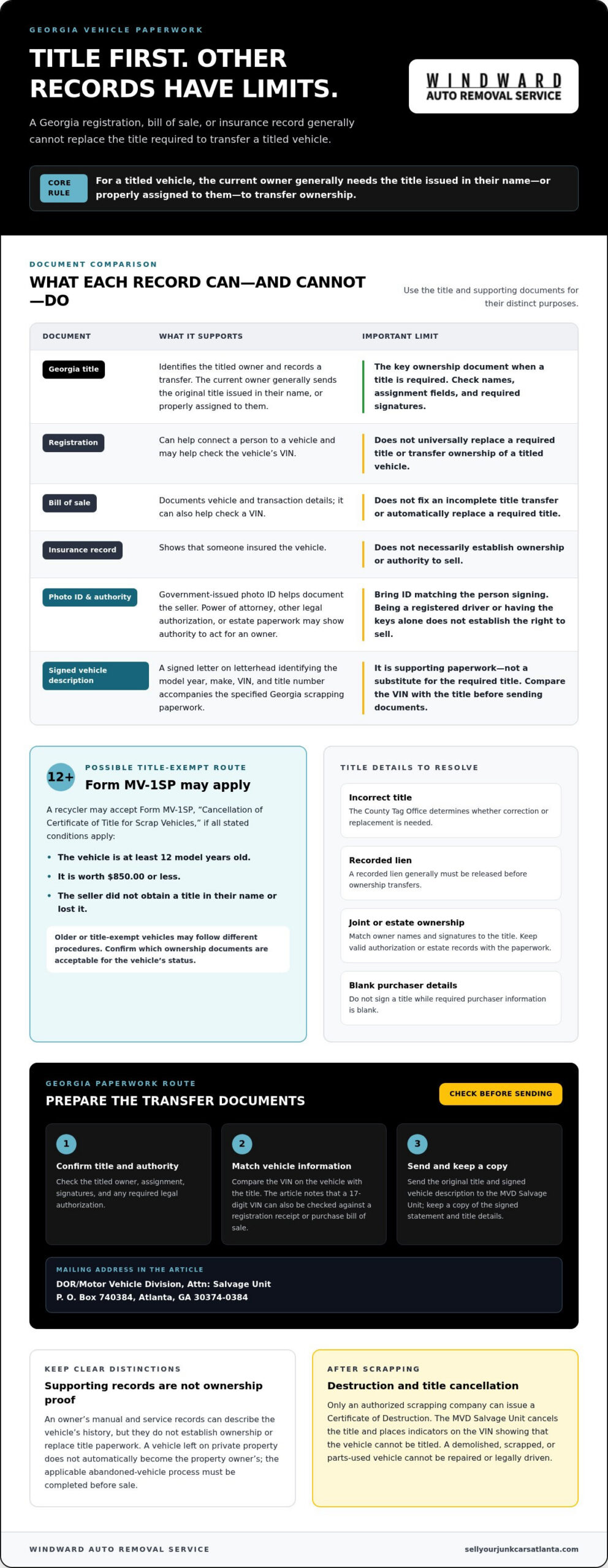
A Georgia registration, bill of sale, or insurance record generally cannot replace a title when one is required. For a titled vehicle, the current owner generally needs the title issued in their name to transfer ownership. The answer to what paperwork you need to scrap a car in Georgia starts with the title, though older or title-exempt vehicles may follow different procedures.
Registration or a signed bill of sale may seem like enough to prove you can hand over a car. These records can help document the vehicle, but they do not necessarily establish ownership or complete a title transfer. Get the required paperwork in order before transferring the vehicle.
This guide covers the title and seller documents commonly needed, what to do about a missing or incorrect title, and how to handle the license plate and related paperwork. You’ll know what to prepare and which details may affect the process.
Key Takeaways
- A title is generally the key document for scrapping a titled Georgia vehicle; registration, insurance records, or a bill of sale may not take its place.
- Missing, incorrect, or older-vehicle paperwork can change the process, so identify the right ownership documents before arranging the transfer.
- Make sure the person selling the vehicle has authority to do so, and prepare identification and transaction records.
- Handle the license plate and related paperwork as part of closing out the vehicle, not as an afterthought.
- Once your paperwork is ready, Windward Auto Removal Service buys junk, used, and totaled cars, as well as scrap trucks and SUVs.
Requirements for Georgia vehicle owners scrapping a vehicle
A Georgia vehicle that requires a title generally needs its current owner’s title for the transfer. Registration and insurance records do not replace ownership documents for a titled vehicle.
Signed Vehicle Description
A signed vehicle description is a letter identifying the car submitted with Georgia scrapping paperwork. Include the model year, make, VIN, and title number on signed letterhead. Under OCGA 40-3-36, the registered owner must submit the specified title and vehicle information. Compare the vehicle’s VIN with the title before sending paperwork; a 17-digit VIN can also be checked against the registration receipt or purchase bill of sale.
Georgia owners must send the original title issued in their name, or properly assigned to them, to the MVD Salvage Unit. Mail the paperwork to DOR/Motor Vehicle Division, Attn: Salvage Unit, P. O. Box 740384, Atlanta, GA 30374-0384. Keep a copy of the signed statement and title details for your records.
Photo ID and Vehicle Title
Photo identification is a government-issued ID used to document the seller in the purchase record. Bring ID that matches the person signing the transaction. A seller acting for the owner may need valid power of attorney or other legal authorization. For an inherited vehicle, estate paperwork can help establish authority to sell. The person handling the estate should ensure the title and authorization support the transfer.
A Georgia title with an error may need correction or replacement, as determined by the County Tag Office. Don’t sign a title while leaving the purchaser’s name or other required information blank, since missing details can disrupt the transaction. A recorded lien generally must be released before ownership transfers. Registration can support an ownership claim, but it does not universally replace a required title.
Older or title-exempt vehicles may follow different procedures, so identify the acceptable ownership documents before delivery. A recycler may accept Form MV-1SP, “Cancellation of Certificate of Title for Scrap Vehicles,” if the vehicle is at least 12 model years old, worth $850.00 or less, and the seller did not obtain a title in their name or lost it.
Title Paperwork Risks
Title paperwork problems can delay a sale or leave ownership records incomplete. Without the required title or a valid alternative, a recycler may not be able to complete the purchase. A bill of sale documents transaction details but does not fix an incomplete title transfer. Insurance records show coverage, not necessarily ownership or authority to sell.
Only an authorized scrapping company can issue a Certificate of Destruction. The MVD Salvage Unit cancels the title and places indicators on the VIN showing that the vehicle cannot be titled. A vehicle that has been demolished, scrapped, or used for parts cannot be repaired or legally driven. Resolve ownership documents before transferring the vehicle, especially if an estate, lien, title error, or missing title is involved.
Joint ownership and required signatures
Joint ownership means more than one person has an ownership interest recorded for the vehicle. Before selling, compare the names and signature fields on the title with the people completing the transfer.
Names and Signatures on Ownership Documents
The title identifies the titled owner and records a transfer. Read the owner names and assignment area carefully, then confirm that the people signing have authority to act. Being a registered driver or having the vehicle’s keys does not, by itself, give someone the right to sell it.
If one owner is acting for another, valid power of attorney or other legal authorization may be needed. Keep that authorization with the title paperwork so the seller’s role is clear. A name mismatch, incomplete assignment, or missing signature can cause problems during the transaction. Don’t sign a title with required purchaser information left blank.
Alternative Ownership Documents
Alternative ownership documents may support an ownership claim but do not automatically replace a required title. Georgia registration can help connect a person to a vehicle, but it does not transfer ownership of a titled vehicle. Insurance records show that someone insured the car, not necessarily that they own it or can sell it.
A bill of sale can record vehicle and transaction details, but it does not fix an incomplete title transfer. A vehicle left on private property does not automatically become the property owner’s. The applicable abandoned-vehicle process must be completed before sale. Older or title-exempt vehicles may follow different procedures, so acceptable documents depend on the vehicle’s status.
Owner’s Manual and Book Pack
An owner’s manual explains vehicle features and how they work or can be adjusted. A book pack may also contain service records, such as a stamped service book or certificates and receipts documenting repairs, maintenance, and modifications.
These materials can describe the vehicle’s history, but they do not establish ownership or replace title paperwork. Keep them separate from documents proving authority to sell. If the manual or records are missing, focus on ownership paperwork and the details required for the transaction.
Inherited Vehicle Records
Estate paperwork helps establish who is authorized to handle an inherited vehicle. Before arranging a transfer, gather the vehicle title and records showing the signer’s authority to act for the estate. Being named as a driver or insured party does not, by itself, permit someone to sell the vehicle.
Keep the names consistent across the title, authorization, and transaction documents. If the title still names the deceased owner, the estate representative’s authority matters. Organize the paperwork before transferring possession, and use the title’s signature fields rather than adding informal notes.
For a vehicle you’re ready to sell, organize the ownership documents before arranging the handoff. You can also sell a junk car in Atlanta once the paperwork is ready.
Seller identification and transaction records
Seller identification links the person transferring a vehicle to the transaction record. Keep your ID, ownership paperwork, and signed sale details together when handing over the car.
What paperwork should you get from a Georgia junkyard when it takes your car? Ask for a completed transaction record or receipt identifying the vehicle and recording the transfer. Keep your own copy of the signed sale documents and note which title or cancellation document was provided.
Seller Identification
Seller identification is a government-issued ID used to document who sold the vehicle. Prepare photo identification and proof of address, such as a driver’s license or passport and a recent utility bill. The name on your ID should match the seller named in the transaction documents.
Georgia secondary metals recyclers must keep a copy or scan of the seller’s government-issued ID card in their purchase records. They must also keep a signed and sworn statement from the seller. These records document who transferred the vehicle, so review the seller details before signing.
Insurance records do not necessarily prove ownership or authority to sell. If you’re acting for the owner, bring valid power of attorney or other legal authorization to make your role clear in the transaction record.
MVT-16 and Government ID
MVT-16 is a form used in a specific Georgia no-physical-title purchase process. Licensed scrap processors may purchase vehicles that are ten years or older without a physical title using an MVT-16 form, government identification, and a record check.
This process does not replace title paperwork for every vehicle. The vehicle’s age and the processor’s applicable procedure matter. Bring your government-issued ID and the vehicle information needed for the record check, and complete the form accurately. Registration or insurance documents are not automatic substitutes for the required process.
Transaction records are the documents a secondary metals recycler keeps to document its vehicle purchase. Georgia recyclers must retain legible purchase transaction records for two years. For end-of-life vehicles and trailers, those records must include a copy of the title or title cancellation certificate under O.C.G.A. §40-3-36.
The recycler’s records also include a copy or scan of the seller’s government-issued ID and a signed, sworn statement. Before the vehicle leaves, ask for a receipt or written record identifying the vehicle and transfer. Check that the VIN and seller details are legible, then keep your copy with any signed paperwork.
If the vehicle qualifies for the no-physical-title process, make sure the MVT-16 and identification details are handled as part of that record. For other sales, keep a copy of the title or applicable cancellation certificate information with your transaction papers. Organized documents make the handoff easier to track. If you’re ready to sell your junk car in Atlanta, prepare your paperwork before the transfer.
Removing plates and notifying the licensing bureau
A Georgia license plate identifies the vehicle for registration, while the title records ownership. Handle the plate and registration separately from the title transfer so each record reflects the vehicle’s scrapping.
If the Georgia plate remains on the scrapped vehicle, the owner must submit it. Use Form T-158 to report and/or surrender a Georgia license plate left on a scrapped vehicle. This form addresses the plate, not the title. A completed title transfer or title cancellation does not replace the required plate step when the plate stays with the vehicle.
Cancel the vehicle’s registration before ending insurance coverage to avoid an uninsured-registration problem. Treat this as separate from signing the title or handing over the vehicle. For example, if you transfer a car today but leave its registration active, the insurance and registration records may no longer match your plans for the vehicle.
Use this sequence to keep the handoff organized:
- Decide whether the Georgia license plate will stay on the scrapped vehicle or be removed.
- If it stays, submit the plate and use Form T-158 to report and/or surrender it.
- Cancel the vehicle’s registration before ending its insurance coverage.
- Keep the completed plate and registration paperwork with your title-transfer or cancellation records.
These steps apply to a totaled car, an old vehicle, or a van leaving a fleet. If a plate remains on a vehicle being scrapped, the owner must submit it. The title alone does not close out this step. If you remove the plate, keep the paperwork for the separate registration cancellation.
A replacement vehicle title is a different matter from a license plate or registration record. If the title has an error or needs replacement, resolve that title issue through the applicable process; Form T-158 handles a plate left on a scrapped vehicle. Keep the form’s purpose clear when organizing documents, especially when title paperwork and registration actions happen at different times.
After completing the plate and registration steps, keep the paperwork with your transaction records. Note whether the plate was submitted, whether registration was canceled, and when insurance coverage ended. This record helps distinguish the vehicle title transfer from the separate administrative steps involving the Georgia plate and registration.
Documents commonly needed to scrap a car
A scrapping document packet is the set of ownership, seller, vehicle, and plate records used to complete a transfer. For a titled Georgia vehicle, start with the original title issued in the owner’s name or properly assigned to them.
Use this checklist to assemble records for a Georgia vehicle headed for salvage or recycling:
- Ownership: Original Georgia title, or the applicable title cancellation certificate.
- Seller: Government-issued photo identification and, if acting for someone else, legal authorization.
- Vehicle: Signed statement on letterhead listing model year, make, VIN, and title number.
- Plate: If the Georgia license plate stays on the scrapped vehicle, submit it using Form T-158.
- Transaction: Keep a copy of the signed sale record and documents identifying the vehicle and transfer.
Check the 17-digit VIN on the vehicle against the title and transaction records before signing. If the VIN differs, pause the paperwork and resolve the mismatch before transferring the car. A private bill of sale can record vehicle and transaction details, but it doesn’t replace a required title or correct an incomplete title transfer.
A title cancellation certificate may apply when a vehicle is at least 12 model years old, worth $850.00 or less, and the seller did not obtain a title in their name or lost it. The applicable Georgia form is MV-1SP, “Cancellation of Certificate of Title for Scrap Vehicles.” Keep the eligibility conditions together; this certificate is not a universal substitute for every missing title.
For the state submission, owners must send the original Georgia title issued in their name or properly assigned to them, plus the signed vehicle description, to the MVD Salvage Unit. The description must identify the model year, make, VIN, and title number. Mail the paperwork to DOR/Motor Vehicle Division, Attn: Salvage Unit, P. O. Box 740384, Atlanta, GA 30374-0384.
Before the handoff, confirm whether a recorded lien has been released and whether another person needs to authorize the sale. Keep copies of the title details, signed statement, identification, and transaction record. Secondary metals recyclers must forward the original title or title cancellation certificate to the Motor Vehicle Division within 72 hours of receiving it.
Once your paperwork is organized, sell your junk car with the key records ready for the transfer.
Windward Auto Removal Service: Cash for Junk Cars
When you’re ready to sell an unwanted vehicle after preparing the paperwork, Windward Auto Removal Service offers Cash for Junk Cars. It also buys used cars, totaled vehicles, and scrap trucks and SUVs. Organizing the title and seller documents helps you prepare the essential information for the transfer.
Gather your ownership documents and government-issued ID, and keep the vehicle details handy. Whether you’re selling a damaged car or an unwanted truck, connect your paperwork with the sale. Windward Auto Removal Service offers instant online quotes, free towing, and cash payment on the spot, with no hidden fees.
To discuss selling your vehicle, visit Windward Auto Removal Service.
Get Your Next Step in Motion
The paperwork is part of a bigger decision: what do you want to do with the vehicle once its ownership transfer is ready? If you’re still asking what paperwork you need to scrap a car in Georgia, use the documents you’ve gathered to move from preparation to action. A clear next step helps you avoid leaving an unwanted vehicle sitting while you decide how to handle it.
Windward Auto Removal Service offers Cash for Junk Cars, Cash for Used Cars, and Cash for Totaled Vehicles. Choose the option that fits your vehicle and move forward with the sale. The right fit depends on the vehicle you’re ready to sell and your plans for it.
When you’re ready to take that step, visit Windward Auto Removal Service to discuss selling your vehicle. You’ve done the preparation. Now you can move ahead with a clearer plan and a practical next step.
Frequently Asked Questions
Can Registration, a Bill of Sale, or Insurance Replace the Title?
No. For a Georgia vehicle that requires a title, registration, a bill of sale, and insurance records do not replace it. Each record serves a different purpose: registration connects a vehicle to registration records, a bill of sale documents a transaction, and insurance shows coverage. An insurance policy in your name alone, for example, does not establish that you have authority to sell a titled vehicle.
Can You Junk a Car If the Title Is Not in Your Name?
Generally, you need ownership documents that establish your authority to transfer the car. A title issued to someone else does not make you the owner just because you drive or insure the vehicle. If you’re handling a sale for the owner, valid power of attorney or other legal authorization may apply. For an inherited vehicle, estate records should support the representative’s authority to act.
How Do You Complete the Ownership Transfer Correctly?
Complete the transfer by ensuring the title, seller details, vehicle identification number, and transaction record match. Before signing, compare the VIN on the car with the VIN on the title, then check that required purchaser information is entered. A mismatch or blank required field can complicate the transfer. Keep a copy of the completed sale record to document which vehicle changed hands.
How Should You Handle Special Ownership Situations?
Match the paperwork to the ownership situation before transferring the vehicle. For joint ownership, review the owners listed on the title and the signature areas. If someone else is selling on the owner’s behalf, legal authorization may be needed. An estate representative should have records supporting authority over an inherited car. A vehicle abandoned on private property does not automatically belong to the property owner; complete the applicable abandoned-vehicle process first.
How Can I Verify If My Car Has an Active Lien Before Scrapping?
Review the vehicle title and lien records for an unreleased lien before arranging the sale. A recorded lien generally must be released before ownership can transfer to a recycler. If the title still shows a lien, gather the lien-release paperwork and resolve the record before signing over the vehicle. A clear title transaction depends on both the seller’s authority and the status of any recorded lien.
How Do You Scrap a Car With No Title?
First identify whether the vehicle follows a specific no-title procedure. Licensed scrap processors may purchase vehicles that are ten years or older without a physical title using MVT-16, government identification, and a record check. A title cancellation certificate may also apply to a vehicle at least 12 model years old, worth $850.00 or less, when the seller never obtained a title in their name or lost it.
What If the Title Is Lost, Damaged, or Completed Incorrectly?
Resolve the title issue before transferring the vehicle. A Georgia title with an error may need correction or replacement, as determined by the County Tag Office. A replacement title may require an application, identification, an applicable fee, and additional records for liens or name changes. If the purchaser’s name or other required information is missing, a bill of sale will not fix the incomplete title.
What Paperwork Do You Need to Junk a Car?
If you’re asking what paperwork you need to scrap a car in Georgia, start with the title or an applicable title cancellation certificate. Prepare government-issued identification, proof of ownership or legal authorization when applicable, and the vehicle details needed for transaction records. Include the signed vehicle description for the state submission. If the Georgia plate stays on the scrapped vehicle, include the required plate submission paperwork in your closeout steps.