Get Rid of a Car With Worn Brake Pads or Shoes in Alpharetta
A brake warning light is a reason to take your car’s stopping ability seriously. If you need to get rid of a car with a worn brake pad light on in Alpharetta, have the braking system inspected as soon as possible. Longer stopping distances can point to worn brake components or a hydraulic-system problem. The warning light alone won’t tell you whether repairing or selling is the better choice.
It’s frustrating to weigh repair costs against keeping a car that no longer feels dependable. This article covers brake-wear signs, what to consider before repairing or selling, and the paperwork involved in a Georgia vehicle sale. Use these practical steps to choose a clear next move without overlooking safety or the car’s overall condition.
Key Takeaways
- Gather the vehicle and ownership details you’ll need to prepare for a sale or junking process in Georgia.
- Use longer stopping distances and signs of brake wear to weigh repair against selling the car as-is.
- Before agreeing to an as-is sale, clarify the payment terms, paperwork, and any proposed deductions or fees.
- If the car is no longer worth keeping, explore a cash sale based on its condition and vehicle type.
What documents are needed to sell or junk a car in Georgia?
Start with the vehicle’s ownership paperwork and the name shown on it. For a car titled in Georgia, gather the title, your photo identification, and the vehicle identification number (VIN). The VIN appears on the dashboard near the windshield and on the ownership documents. Compare those details before discussing the sale. A mismatch in names or VINs can slow down the transaction.
Use this preparation checklist:
- Ownership record: Locate the title or other paperwork showing who owns the vehicle. Keep it in its current condition; don’t alter names or details before the transaction.
- Photo identification: Have identification for the person handling the sale. Compare its name with the ownership paperwork.
- Vehicle details: Write down the VIN, make, model, and odometer reading. For example, confirm that the VIN on the dashboard matches the title.
- Loan information: If a lender appears on the paperwork, collect the loan account details and any records showing the lien’s status. This helps clarify who must handle the outstanding interest in the vehicle.
- Authority to act: If someone else is handling the sale, gather paperwork that explains their authority, such as relevant estate or business records.
Ownership complications call for extra preparation. If the title lists two owners, check both names and determine who will participate in the transaction. If the registered owner has died, gather estate paperwork showing who can manage the vehicle. For a company-owned car, locate records identifying the business and the person authorized to act for it. These documents explain the circumstances but don’t replace the vehicle’s ownership record.
A missing title changes the first step. Don’t assume a registration card, old bill of sale, or insurance document can replace it. Gather those records anyway, since they may help identify the vehicle and establish its history. Resolve the ownership-paperwork issue before treating the sale as ready to complete. The required documents depend on the vehicle’s record and circumstances, so keep everything together rather than relying on a single page.
Before handing over the keys, organize the ownership paperwork, identification, VIN, and any lien or authority records. Keep copies or clear photos for your files. Record the buyer’s details and transaction date, and retain the signed sale documents. If you’re preparing to get rid of a car with a worn brake pad light on in Alpharetta, keep its brake and service records separate from the ownership documents. They describe the car’s condition; the title and related records show who can sell it.
Use the title as the ownership record, and check that its name and VIN match your identification and the vehicle before completing the sale. Don’t alter the title beforehand. Record the buyer’s details and transaction date, and keep copies of the signed sale documents.
Should I repair the brakes before selling or trade in the car?
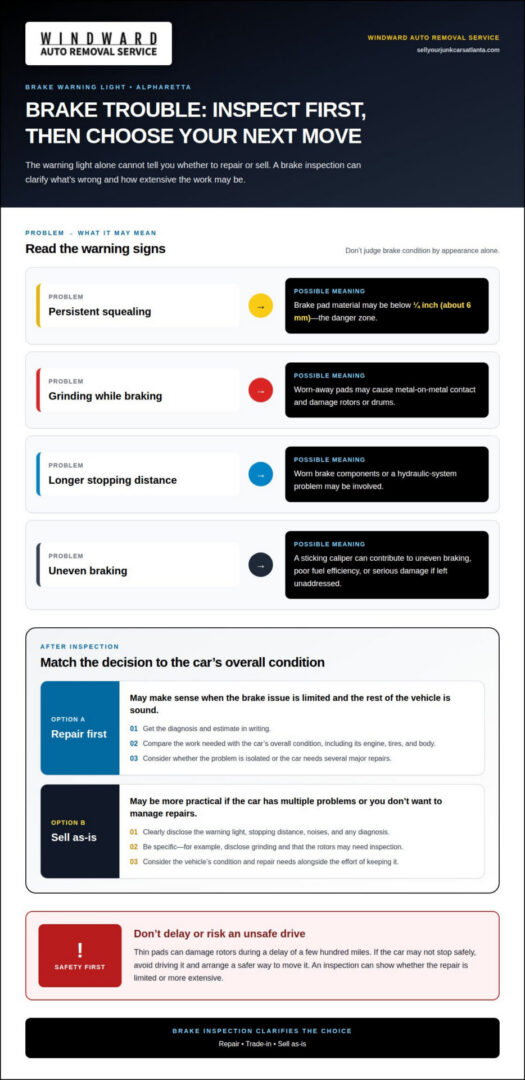
A brake warning light means the braking system should be inspected as soon as possible. Longer stopping distances can result from worn brake components or a hydraulic-system problem. Don’t dismiss the light as a minor dashboard nuisance, especially if braking feels different. A diagnosis can show whether the issue is limited to the pads or involves other parts.
Watch for these signs when deciding your next step:
- Persistent squealing: This can mean the brake pad material has dropped below ¼ inch. Friction material thinner than ¼ inch, or about 6 mm, is in the danger zone.
- Grinding: Pads worn completely away can create metal-on-metal contact. Continued contact may damage rotors or drums.
- Longer stops: A car that takes longer to stop may have worn brake components or a hydraulic problem. Avoid judging the issue by appearance alone.
- Uneven braking: A sticking caliper can lead to uneven braking, poor fuel efficiency, or serious damage if left unaddressed.
Repairing first may make sense if an inspection finds a limited brake problem and the rest of the vehicle is in sound condition. Get the diagnosis and estimate in writing, then compare the work needed with the car’s overall condition, including its engine, tires, and body. A car with one isolated brake issue calls for a different decision than one needing several major repairs.
Selling without repairing may be more practical if the car has multiple problems or you don’t want to manage repairs. Be clear about the warning light, stopping distance, noises, and any diagnosis. For example, disclose grinding during braking and that the rotors may need inspection. Clear details reduce confusion and help a buyer assess the vehicle accurately.
Don’t put off an inspection for a few hundred miles if the warning light is on. Thin pads can damage rotors during that delay. If you’re considering selling a car as-is, weigh its condition and repair needs against the effort of keeping it. Avoid driving a car that may not stop safely; arrange a safer way to move it rather than risking a trip through Alpharetta traffic. A brake inspection gives you a clearer basis for choosing repair, trade-in, or sale.
Brake pads worn completely away can cause metal-on-metal grinding and may damage rotors or drums.
Delaying an inspection for a few hundred miles can let thin pads damage the rotors. An early inspection can clarify whether the repair is limited or more extensive.
What scams or fees should I watch for when selling a car as-is in Georgia?
An as-is sale still needs clear terms. Before agreeing, put the vehicle’s condition, payment amount, pickup arrangements, and any deductions in writing. If a buyer says the brake warning light changes the offer, for example, record that adjustment before signing. A verbal promise can be difficult to compare with the final paperwork.
Watch for payment and negotiation warning signs:
- Overpayment requests: Treat a buyer’s request to deposit an oversized check and return the extra money as a red flag. Don’t send funds back based on a screenshot or payment notification.
- Unclear payment status: Confirm payment through your own account or financial institution before handing over the keys or signed documents. A message claiming that funds are pending isn’t the same as confirmed payment.
- Last-minute deductions: If a buyer changes the agreed amount after arriving, pause. Ask for the revised terms in writing and decide whether you accept them before proceeding.
- Pressure to sign blank forms: Don’t sign paperwork with empty fields or details that differ from your agreement. Review every page and keep a copy.
Review the offer and any charges carefully. Ask for a written breakdown before accepting a charge, showing what it covers and whether it reduces your payment or requires a separate payment. For example, distinguish a stated pickup deduction from an unexpected charge at handoff. Don’t rely on a vague phrase such as “processing costs” without a clear explanation.
Keep the transaction record together. Save the written offer, messages about the car’s condition, payment confirmation, and final sale paperwork. Note the date, buyer’s name or business details, and vehicle VIN on your copy. If the buyer arranges pickup, confirm who will collect the car and whether that changes the agreed terms. This creates a record of what you accepted and any changes.
Before the handoff, compare the final paperwork with the offer. Check that the vehicle description, payment terms, and any listed deductions match your agreement. Don’t let a buyer rush you through a changed document, even if the car is already loaded. If the terms don’t match, stop and resolve the difference before signing or releasing the vehicle. For a straightforward next step, request a written offer for your car and review its terms before proceeding.
Windward Auto Removal Service: Cash for Junk Cars
Windward Auto Removal Service buys unwanted, broken-down, and damaged vehicles in the Metro Atlanta area, including Alpharetta. If brake problems or other damage make keeping your car impractical, you can explore a sale rather than take on repairs. The right choice depends on the car’s overall condition, not the warning light alone.
If you’re ready to scrap the vehicle, Windward Auto Removal Service buys junk cars, including vehicles with brake problems. The company also buys totaled vehicles, scrap trucks, and SUVs. Describe the brake symptoms and other known problems clearly so the vehicle’s condition is understood during the sale.
Contact Windward Auto Removal Service to discuss your vehicle.
Choose a Clear Next Step for Your Car
Base your next move on the car’s full condition and how much time you want to spend keeping it on the road. If you’re deciding how to get rid of a car with a worn brake pad light on in Alpharetta, consider the outcome you want: repair it and continue driving, or sell it and move on. Choose the path that fits your situation, then take a practical step toward it.
Windward Auto Removal Service offers Cash for Junk Cars, Cash for Used Cars, and Cash for Totaled Vehicles. Share the vehicle details and its condition to start a conversation about selling. There’s no need to let an unresolved brake issue keep the decision stalled.
Contact Windward Auto Removal Service to discuss your car and consider your next step with confidence.
Frequently Asked Questions
Where can I sell a car as-is in Alpharetta with a brake problem?
Windward Auto Removal Service buys junk and used vehicles in Alpharetta, including cars with brake problems. To prepare for a conversation, note the vehicle’s make and model, odometer reading, and whether the warning light stays on. A clear photo of the dashboard can help you describe the issue. If braking feels unsafe, don’t drive the car to arrange a sale.
How much do junk car buyers in Alpharetta pay for cars with bad brakes?
There isn’t one fixed amount for a car with bad brakes. An offer depends on its condition, make, model, and scrap value. Share the vehicle details and describe the brake symptoms, along with other known damage, to get an assessment based on the actual car. A warning light alone doesn’t show whether the problem is limited to pads or involves other components.